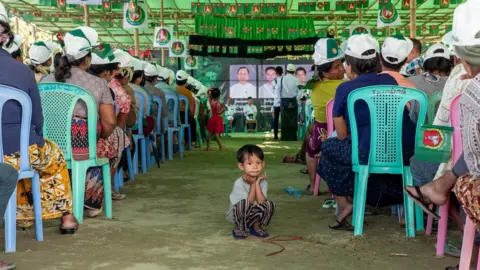
On a patch of rough ground near the Irrawaddy River, aspiring member of parliament and retired Lieutenant-General Tayza Kyaw tries to muster some enthusiasm from his audience with a speech promising them better times.
He is the candidate for the Union Solidarity and Development Party (USDP), backed by Myanmar's military, in Aungmyaythazan, a constituency in the city of Mandalay.
The crowd of 300-400 clutch the branded hats and flags they've been given, but soon wilt in the afternoon heat, some dozing off. Children run and play in between the rows of chairs. Many of these families are victims of the earthquake which badly damaged Mandalay and surrounding areas in March, and are hoping for a handout. They disappear the moment the rally finishes.
On Sunday, the people of Myanmar will have their first opportunity to vote since a military coup in 2021 set off a devastating civil war. However, this election is widely condemned as a sham, with the most popular party, the National League for Democracy (NLD), dissolved and its leader incarcerated.
Voting is set to occur in three stages over a month, yet large parts of the country remain unreachable due to conflict, with fear and intimidation dominating the process.
The atmosphere surrounding the elections reveals a palpable nervousness among citizens, many fearful to express their opinions openly. In Mandalay's markets, customers shy away from discussing the elections, aware of the consequences of voicing dissent in a dictatorship that pathologizes criticism.
A woman dared to speak confidentially, labeling the elections a 'lie' indicative of a pervasive culture of fear and repression. She chose not to vote, knowing the potential repercussions.
General Tayza Kyaw, while leading a campaign rally, evoked threats from authorities who have criminalized any dissent about the electoral process. The junta has imprisoned or charged several voices advocating for a boycott of the elections.
In a district still under fire from a brutal civil war, many miss the vibrant political climate of the 2020 elections, foreseeing low turnout driven by fear and resignation.
The election’s legitimacy remains in question with significant territorial parts of the country in turmoil as armed groups continue their resistance against the junta. This situation ensures the military’s ruling party, the USDP, is set to obtain a favorable outcome devoid of true democratic engagement.