In brief
On the eve of the Munich Security Conference, Europe faces an uncertain future shaped by former President Trump's controversial strategies, including calls for increased European self-reliance in defense and the unsettling Greenland crisis. With world leaders gathering, questions about US commitment to NATO and European security persist.
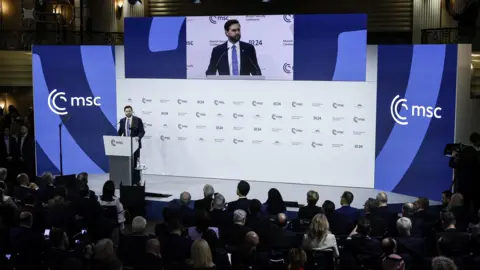
As the world anticipates the upcoming Munich Security Conference, the shadow of former U.S. President Donald Trump's policies is felt especially deeply in Europe. With over 50 world leaders set to attend, discussions will center around pressing issues of security and defense.A year ago, U.S. Vice President JD Vance's startling speech at this very conference criticized European policies on migration and free speech, claiming Europe's greatest threats come from within. This remark set off alarm bells among European allies and foreshadowed a tumultuous shift in transatlantic relations that has continued to evolve under Trump's administration. Under Trump, punitive tariffs have been introduced against allies, while his administration's pursuit of peace in Ukraine and controversial comments about Canada becoming the '51st state' raised eyebrows around the globe.Preceding this year’s conference, the U.S. National Security Strategy echoed sentiments of encouraging Europe to take 'primary responsibility for its own defense', hinting at a wavering commitment from the U.S. to support its allies.The crisis regarding Greenland, a self-governing territory of Denmark, has particularly frayed transatlantic ties. Trump's former insistence on the need to 'own' Greenland has been met with firm rebuffs from Denmark, underscoring concerns about the implications for NATO and European security.Despite the current geopolitical climate, experts agree that while the dynamics of U.S.-European relations have shifted, they remain intact. Former MI6 chief, Sir Alex Younger, asserted that Europe must better shoulder its defense burdens, shifting historical reliance on American military support. The upcoming conference promises to address these issues but may lead to more unsettling realities for Europe's leaders, highlighting an era of divisive politics and strategic uncertainty.