In brief
US Secretary of State Marco Rubio has arrived in Europe to address the Munich Security Conference, marking a significant moment in US-European relations. With discussions centered around independence from US influence, the war in Ukraine, and relations with China, Rubio is set to communicate a vision for a redefined transatlantic partnership. He acknowledges the changing geopolitical landscape, urging leaders to reconsider their roles and responsibilities in an uncertain world. This year's conference takes place against the backdrop of heightened tensions stemming from recent US threats regarding Greenland.
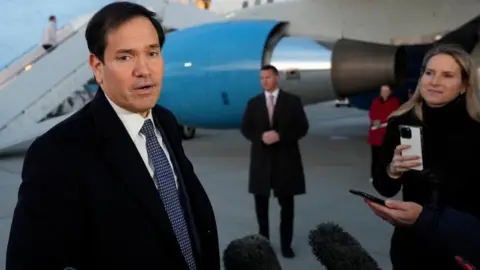
US Secretary of State Marco Rubio has spoken of a defining moment and a new era as he travels to Europe for a major speech to the Munich Security Conference. Rubio will lead the US delegation at the first major global event since President Donald Trump threatened Danish sovereignty with a pledge to annex Greenland.French President Emmanuel Macron has insisted Europe must prepare for independence from the US, while Nato Secretary General Mark Rutte has stressed that transatlantic bonds are as close and important as ever. The war in Ukraine, tensions with China, and a potential nuclear deal between Iran and the US are also on the agenda as the security conference gets under way.The world is changing very fast right in front of us, Rubio told reporters, when asked if his message to Europeans would be more conciliatory than a year ago. We live in a new era in geopolitics, and it's going to require all of us to sort of re-examine what that looks like and what our role is going to be.At last year's conference, US Vice-President JD Vance attacked Europe for its policies, triggering unprecedented transatlantic tension. Some 50 world leaders are set to attend the current conference, discussing European defence and the future of the transatlantic relationship at a time of questioned US commitments to NATO.Tensions have been heightened recently as Trump repeatedly claimed Greenland’s strategic importance, stating without evidence it was "covered with Russian and Chinese ships all over the place." Danish Prime Minister Mette Frederiksen has expressed intentions to meet with Rubio to discuss US threats.The US's stance has alienated many European leaders, prompting a call from former US officials for Washington to reinforce its support for NATO, seen as a critical collaborative defense strategy. Meanwhile, geopolitical analysts expect Rubio to adopt a tone more focused on healing relationships and defining mutual interests rather than confrontation. As the conference unfolds, the aim is to unify Nato and demonstrate the necessity of Europe to US interests. Conference chairman Wolfgang Ischinger voiced concern about the shifting understanding of international order, signaling a need for clarity and cooperation going forward.