In brief
As West Bengal prepares for its assembly elections, candidates from both the BJP and the ruling Trinamool Congress are using fish as a potent symbol in their campaigns. This strategy speaks to Bengal's deep-rooted culinary traditions, emphasizing that food is not just sustenance but a critical element of cultural and political identity. With claims and counterclaims surrounding dietary preferences, the use of fish highlights how food politics shape election narratives in the region.
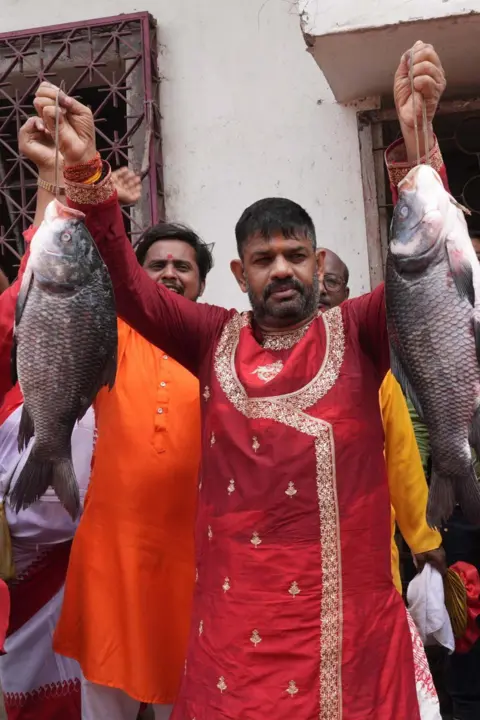
On a sticky morning in the eastern Indian city of Kolkata, Koustav Bagchi moves from door to door in a crisp white and red traditional attire, a fish in hand. Drums thud behind him as supporters chant his name. A lawyer-turned-politician and the Bharatiya Janata Party (BJP)'s candidate from Barrackpore in the upcoming West Bengal assembly elections, Bagchi is banking on the piscine prop to do the quiet work of persuasion. There are no speeches about policy - just a visual cue: I am one of you.A few kilometres away in Kolkata's port area, another BJP candidate, Rakesh Singh, stages a similar spectacle, hoisting a fish repeatedly as he moves through early-morning crowds. In Bengal, fish is more than food - it is the bloodstream of the cuisine, woven into memory, ritual and everyday life, a marker of both identity and belonging. Across West Bengal, that resonance is now being staged as political theatre, with candidates brandishing fish to quell a very specific anxiety.In a country where food habits can be deeply political, Prime Minister Narendra Modi's BJP is often associated with a more assertive, sometimes moralised vegetarianism. Periodic restrictions on meat sales in some BJP-ruled states and crackdowns linked to cow protection have helped cement that perception. In the West Bengal election, fish has slipped from the plate into the centre of the campaign, recast as proof of cultural fidelity and a rebuttal to charges of intrusion.Chief Minister Mamata Banerjee of the ruling Trinamool Congress has warned that the main opposition BJP threatens Bengal's way of life, invoking fish and rice as non-negotiable staples. The BJP will not allow you to eat fish. Nor will they allow you to eat meat or eggs, she said. The BJP has pushed back sharply, seeking to neutralise the charge while turning the attack around.Amid the political back-and-forth, managed narratives highlight how deeply intertwined food and identity are in West Bengal. Sociologists note that fish is now more than just a dietary choice; it has become a symbol of resilience and cultural pride amid changing political landscapes. Even Governor Modi has weighed in, challenging Banerjee's handling of local fish production. Even after 15 years in power, the Trinamool Congress has failed to provide you with even something as basic as fish. Even fish has to be sourced from outside the state, he declared.As these debates unfold, fish emerges not just as part of the cuisine but as a metaphor for broader political discussions regarding identity, livelihoods, and local culture. Ultimately, while fish may not determine the election's outcome, it frames the contest, illustrating how instinctively culture and politics bleed into each other on the campaign trail.