In brief
As Bangladesh prepares for its upcoming elections, rising anti-Indian sentiment among the youth reflects a backlash against perceived Indian influence and support for former Prime Minister Sheikh Hasina's regime, which has been criticized for authoritarianism. The 2024 uprising, which led to Hasina's exile in India, has left a deep sense of betrayal among Bangladeshis. Students are vocalizing their disillusionment through protests and graffiti, signaling a potential shift in the relationship between Bangladesh and India, which could have significant implications for regional diplomacy.
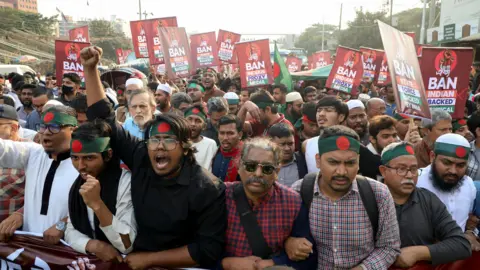
The walls of Dhaka University are screaming again, as graffiti reflecting the anger and aspirations of the youth sprawls across its corridors. This artistic expression echoes the sentiments following the July 2024 uprising that resulted in the ousting of Sheikh Hasina, once seen as Bangladesh's pro-democracy icon but now viewed by many as increasingly autocratic. After her resignation, she found refuge in India.As younger generations engage in political debates under red lanterns celebrating Chinese New Year—a stark symbol of geopolitical competition between India and China—many express concerns about democratic integrity heading into elections on February 12, which will be their first genuine encounter with the ballot box.Muhammad Yunus, the Nobel laureate, stepped up after Hasina's fall, while the deposed leader's Awami League has been barred from contesting the upcoming election. Opposition dynamics are shifting, with the Bangladesh Nationalist Party aiming to capture disillusioned supporters.One prominent message in the protests is 'Dhaka, not Delhi,' indicative of a growing sentiment that resonates through the youth. Among them, Mosharraf Hossain, a sociology student, reflects a common grievance regarding India's alleged role in Bangladesh's democratic erosion, especially following the controversial involvement in the 2014 elections.As tensions rise, relations between India and Bangladesh have soured, with accusations of Delhi supporting Hasina’s regime amid its authoritarian drift. Young voices articulate that India's involvement has not been perceived as supportive but rather interference in their sovereignty. The fallout from these sentiments has seen increased calls for boycotting Indian products and services.Political figures agree that a recalibration of India’s approach towards Bangladesh is crucial, not just for diplomatic stability but also for mending economic ties strained by political tensions. Though the current political landscape shows signs of thawing, the path ahead remains fraught with challenges as deep-seated historical grievances fester.If India wishes to build a constructive relationship with Bangladesh, there is a pressing need to engage with the aspirations of its people, moving beyond alignment with any single political faction to foster mutual respect and cooperation.