In brief
Alphonse Vimulraj Anke Gowda, a retired factory worker from Karnataka, India, has amassed a collection of over two million books in a library he built without professional help. His library, open to all, reflects his passion for reading that began in childhood. Recently honored with the Padma Shri for his contributions to literacy, Gowda hopes to inspire future generations to continue his legacy.
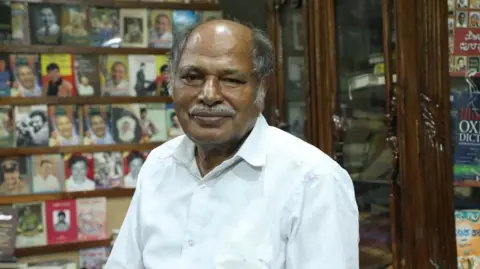
Two million books, housed across a sprawling building, free for anyone to borrow and read. That's the wealth that Anke Gowda, a retired sugar factory worker from India's southern Karnataka state, has accumulated over the past five decades. The 79-year-old made headlines last month when he received the Padma Shri - a civilian honour awarded by the federal government - for his extraordinary contribution to promoting literacy and learning.Gowda, whose eye-popping collection includes rare editions of the Bible and books on every subject imaginable, comes from a farming family where books were a luxury. I grew up in a village. We never got books to read, but I was always curious about them. I kept thinking that I should read, gather books and gain knowledge, he stated.His library, located in Pandavapura, lacks the rigid organisation typically found in libraries, with books stacked haphazardly on shelves and even on the floor. Yet, it serves as a welcoming place for students, parents, and book lovers. Regular visitors know the collection well, and Gowda has an uncanny ability to locate any book within his vast collection.Operating the library out of his home, Gowda spends long hours at the building which also houses sacks filled with 800,000 books still waiting to be unpacked, with the collection supporting literacy efforts through his own purchases and donations.Gowda’s journey began in childhood as he balanced schoolwork with helping his father on the farm. Inspired by books about Indian freedom fighters, he collected books so other students could also benefit from reading. The collection flourished as he moved to work at a sugar factory, where he spent two-thirds of his earnings on books and gradually built a collection that required a dedicated space.The library was particularly bolstered by community support, including a donation from a local liquor baron to construct a building dedicated to the library. With continued interest from educators and students, Gowda has become a local legend, both for his collection and his efforts to inspire others in the community.As he reflects on his achievements, Gowda expresses a desire for others to continue his legacy. I have fulfilled my responsibility. But I don't have the energy anymore. Maybe the government and the public can take over now? Despite the disorganization, those who have visited affirm that Gowda's passion for books resonates throughout, with his library standing as a beacon of knowledge and inspiration.