In brief
The recently announced trade deal between the US and India aims to lower tariffs from 50% to 18%, promoting trade and economic stability. While Indian Prime Minister Modi expresses gratitude for the agreement, analysts urge caution, emphasizing the need for details and clarity on the commitments made by both nations. The sentiment reflects a complex geopolitical landscape as India navigates relationships with major global powers.
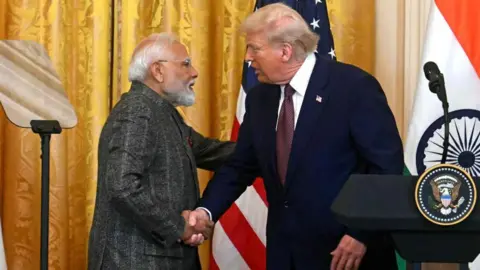
US President Donald Trump's recent decision to lower reciprocal tariffs on India from 50% to 18% has brought a wave of relief to Asia's third-largest economy, though many specifics remain unclear. This tariff reduction comes in the wake of a contentious period where India faced the highest tariffs globally following an increase from 25% to 50% last year. The initial announcement was celebrated by Indian leaders, with Prime Minister Modi thanking Trump for the beneficial agreement and expressing hopes to elevate bilateral relations to 'unprecedented heights'.This trade deal emerges after a rocky phase in US-India relations, marked by a trade war that severely impacted key Indian exports like textiles, seafood, and jewelry. Trump's recent promises seem to signal a shift, prompting hopes that India can regain its footing in US markets.Economic analysts view the lowered tariffs as a means to make India a more favorable alternative in global supply chains, particularly amidst rising tensions with China. Furthermore, the reforms are expected to posit India as a critical player in the geopolitical arena.Despite the optimism surrounding the trade agreement, experts like Ajay Srivastava of the Global Trade and Research Initiative urge caution, highlighting the need for clearer terms and enforceability. Until a formal joint statement is issued, the present sentiment should be interpreted as a positive political signal rather than a guaranteed conclusion.As both India and the US look towards further negotiations to expand this initial agreement, the geopolitical ramifications may encourage India to align more closely with US interests at a time when relations with China and Russia have been intensifying.