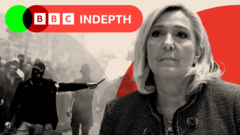
In a fiery reaction to a recent court ruling, France's far-right National Rally (RN) has erupted into political theater following Marine Le Pen's disqualification from running in the 2027 presidential election. The decision has been painted by her party as an attack on democracy and French institutions, with Le Pen's allies venting their anger across media platforms.
Le Pen's conviction, stemming from a case involving the fraudulent use of European Parliament funds, has prompted her to align herself with other political figures who view her as a victim of a biased system. At a press conference, she drew a parallel between her struggle and that of Alexei Navalny, asserting that a "nuclear bomb" was being used against them as they approached potential electoral success.
Despite this fervent outrage, the French public's response appears to be more tempered. A recent opinion poll indicated that only 31% of citizens found the ruling unjust, showing a distinct separation between supporting Le Pen as a politician and viewing her legal troubles as disqualifying. As she faces a five-year ban, the future of the RN and Le Pen herself remains uncertain, with speculation swirling about possible leadership changes should her appeal fail.
Concerns are mounting within centrist political circles about the implications of this ruling on government stability. Prime Minister François Bayrou expressed unease regarding how this affair might shock public sentiment. The divide has fostered a frantic atmosphere in which the RN might exploit the situation to undermine the current coalition government.
As France's political climate shifts, eyes are on the RN's response and potential revenge tactics. With Le Pen's political path narrow since the ruling, younger party leader Jordan Bardella may step in as a pivotal figure for the RN. His ability to connect with disillusioned youth over key issues like immigration could alter the dynamics in the lead-up to 2027.
However, the RN is not without challenges. The intra-party competition for notoriety may provide room for figures such as Interior Minister Bruno Retailleau to emerge, complicating Bardella's role. Historical sentiments show that the credibility of political institutions remains a cornerstone for many French voters, making it uncertain if the RN's strategy of portraying itself as a victim will resonate broadly.
As France grapples with its political future, the potential ramifications of Le Pen's court ruling could shape the landscape substantially. Whether she becomes a champion revitalizing far-right sentiment or another failed candidate may hinge on how effectively she navigates this period of upheaval. Whatever lies ahead, the upcoming years promise a politically charged atmosphere as the battle for presidential power continues.
Le Pen's conviction, stemming from a case involving the fraudulent use of European Parliament funds, has prompted her to align herself with other political figures who view her as a victim of a biased system. At a press conference, she drew a parallel between her struggle and that of Alexei Navalny, asserting that a "nuclear bomb" was being used against them as they approached potential electoral success.
Despite this fervent outrage, the French public's response appears to be more tempered. A recent opinion poll indicated that only 31% of citizens found the ruling unjust, showing a distinct separation between supporting Le Pen as a politician and viewing her legal troubles as disqualifying. As she faces a five-year ban, the future of the RN and Le Pen herself remains uncertain, with speculation swirling about possible leadership changes should her appeal fail.
Concerns are mounting within centrist political circles about the implications of this ruling on government stability. Prime Minister François Bayrou expressed unease regarding how this affair might shock public sentiment. The divide has fostered a frantic atmosphere in which the RN might exploit the situation to undermine the current coalition government.
As France's political climate shifts, eyes are on the RN's response and potential revenge tactics. With Le Pen's political path narrow since the ruling, younger party leader Jordan Bardella may step in as a pivotal figure for the RN. His ability to connect with disillusioned youth over key issues like immigration could alter the dynamics in the lead-up to 2027.
However, the RN is not without challenges. The intra-party competition for notoriety may provide room for figures such as Interior Minister Bruno Retailleau to emerge, complicating Bardella's role. Historical sentiments show that the credibility of political institutions remains a cornerstone for many French voters, making it uncertain if the RN's strategy of portraying itself as a victim will resonate broadly.
As France grapples with its political future, the potential ramifications of Le Pen's court ruling could shape the landscape substantially. Whether she becomes a champion revitalizing far-right sentiment or another failed candidate may hinge on how effectively she navigates this period of upheaval. Whatever lies ahead, the upcoming years promise a politically charged atmosphere as the battle for presidential power continues.