The Socialist Party and their allies retained control of France's major urban centers during a pivotal local election that served as a precursor to next year's presidential elections. The results, pronounced on Sunday evening, saw the Socialists successfully hold onto power in Paris, Marseille, Lyon, and Lille, providing a vital boost for mainstream parties facing a polarized political landscape.
While the far-left and far-right made some headway in areas like Nice and Roubaix, their overall influence was limited, particularly in regions where they sought to challenge the long-standing dominance of the Socialists. The election highlighted the failure of mainstream left parties to effectively coordinate alliances with the far-left France Unbowed (LFI), leading to significant losses in historical strongholds like Clermont-Ferrand and Brest.
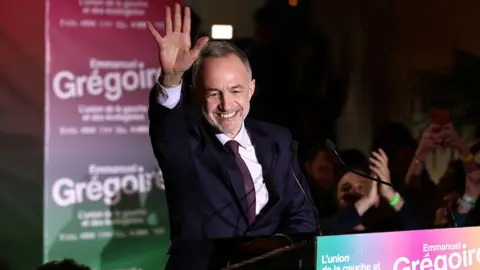
Contrastingly, the Socialists in cities such as Paris and Marseille distanced themselves from extreme factions, emphasizing their commitment to broad-based governance, which resonated positively with voters. Emmanuel Grégoire's victory in Paris, following the former mayor's tenure focused on anti-car policies, reaffirmed the city’s reputation as a stronghold of leftist politics, with Grégoire expected to continue progressive initiatives.
In a broader context, this election reflects the ongoing contestation within French politics, where traditional parties are increasingly grappling with the emergent far-right and far-left factions. Though the far-right National Rally has shown its strength in provincial areas, significant victories by the mainstream on urban platforms signal a possible path towards a revitalized center ahead of the presidential elections.
However, concerns linger regarding what could transpire should the 2027 presidential election feature two candidates from the extremes, further exacerbating political divides and complicating the defense of mainstream democratic values.