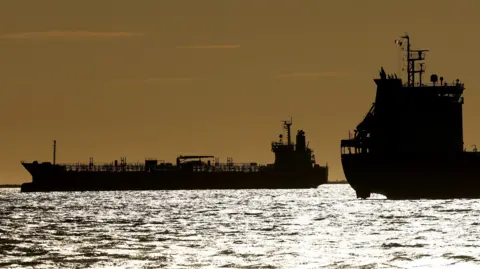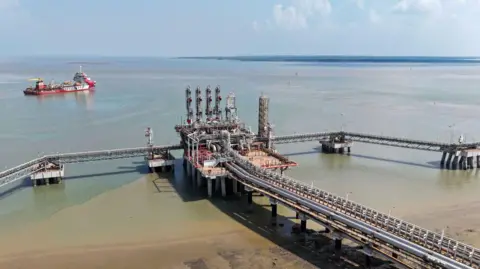
According to data analyzed by BBC Verify, nearly 100 ships have passed through the Strait of Hormuz in March, despite the increasing dangers posed by Iranian forces' actions against shipping routes in the area.
Since the beginning of conflict, maritime traffic in this vital waterway has been severely impacted, with a 95% reduction in daily ship crossings compared to pre-war figures, where an average of 138 vessels used to transit the strait daily.
Shipping analysts report that only an average of 5-6 ships are currently making the journey across the strait. This has resulted in increased concerns over safety and navigational routes.
Of the ships reported to have crossed recently, about one-third are connected to Iran, either registered under its flag or linked to sanctions due to the oil trade with Tehran. Additional vessels are linked to China and India, pointing to shifting trade patterns.
Interestingly, some vessels are intentionally opting for longer routes to avoid detection and potential risks associated with navigating the traditional paths. These changes are indicative of increasing maritime tensions, compelling vessels to either re-route along Iran's coast or stop using their AIS tracking systems altogether, as noted by Dimitris Ampatzidis from Kpler.
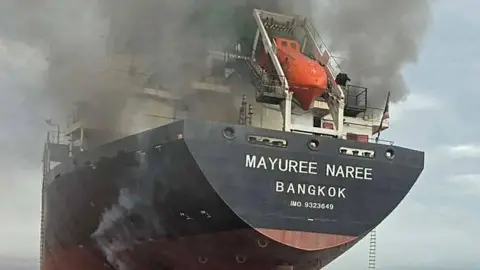
The risks continue to escalate, with multiple incidents of commercial vessels being targeted. Most notably, the Thai-flagged Mayuree Naree faced direct artillery fire, illustrating the precarious environment in which these ships operate.
Experts suggest that vessels navigating the strait are likely adapting to a new reality where maritime routes may lead into Iranian maritime territory to ensure safe passage, demonstrating the ongoing control that Iran exerts in the region.
In summary, while a handful of vessels continue to transit through the Strait of Hormuz, the dynamics of international shipping are shifting dramatically in response to increased tensions and threats.