In brief
Iran’s navy has sealed the Strait of Hormuz again, blaming Israel’s relentless strikes on southern Lebanon for breaching the 2026 US‑Iran agreement to end hostilities. Tehran warned that further maritime restrictions would follow if the conflict escalated. U.S. Central Command insists safe passage remains intact, noting a record 55 merchant vessels transited the strait the day after the announcement. The move comes just after a brief ceasefire between Israel and Hezbollah was declared, but Israeli forces have continued air raids on Lebanese territory. With the Strait channeling roughly 20% of global oil flow, the closure threatens to tighten an already volatile energy market.
The Iranian navy, acting under the Revolutionary Guard, has announced the re‑closure of the Strait of Hormuz, citing Israel’s continued attacks in southern Lebanon as a breach of the 2026 US‑Iran agreement aimed at ending the war. Tehran’s statement warned that keeping the strait open would put security at risk and that further measures would be taken if Israeli aggression continued.
The announcement follows a brief ceasefire that went into effect between Israel and Hezbollah on Friday. However, Israeli forces have pressed on with air strikes on Lebanese targets, and the Iraqi‑American government has condemned the continued operations.
U.S. Central Command maintained that safe passage through the strait was “intact” and that commercial traffic had increased, with 55 merchant vessels transiting the gateway on Saturday. Whether this reflects pre‑or post‑closure conditions remains unclear.
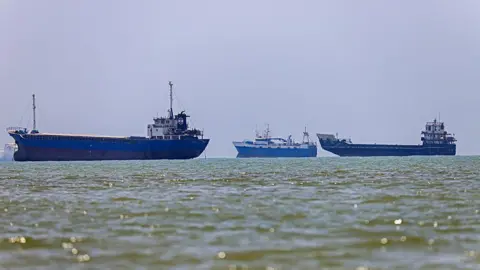
AFP via Getty Images: Vessels anchored in Bandar Abbas along the Strait of Hormuz.
Iran’s remarks point to the US‑Iran memorandum’s first clause, which calls for the immediate and permanent termination of military operations on all fronts, including in Lebanon. Tehran argues the U.S. has failed to enforce this provision, thereby justifying the new blockage.
The Strait of Hormuz is a vital artery for global energy trade, channeling about 20% of worldwide oil and liquefied natural gas. In 2025, roughly 20 million barrels of oil passed through it daily, worth approximately $600 bn annually. Any sustained disruption could strain already volatile markets.
Iran’s diplomatic mission will soon travel to Switzerland to demand that the U.S. fulfill its commitments under the 2026 agreement. Meanwhile, U.S. Vice‑President Dr. J.D. Vance has hinted at upcoming talks with Iran, underscoring the geopolitical stakes of the strait’s closure.