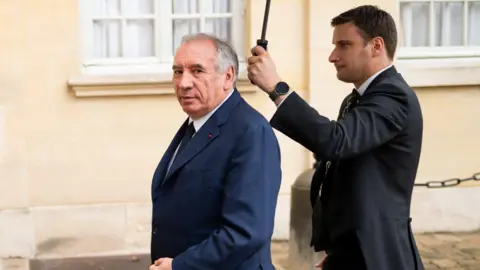
France's parliament – deadlocked for a year and more poisonously divided than it has been in decades – looks set to throw out yet another prime minister on Monday.
But the acute sense of drama surrounding this latest vote of confidence inside Paris's Assemblée Nationale is counterbalanced by a despondent consensus that the almost inevitable removal of 74-year-old François Bayrou, after nine relatively ineffectual months in office, will do nothing to break France's political stalemate.
It's a disaster. The situation is absolutely blocked, veteran political commentator Bruno Cautrès told the BBC.
Others have been even harsher in their diagnosis.
Marine Le Pen, parliamentary leader of the hard-right National Rally party, accused Bayrou of committing political suicide.
The prime minister, a consensus-seeking figure from south-west France with a tendency to frown and to bluster, initiated Monday's surprise vote himself, seeking, as he explained it, to shock politicians into agreeing on a way to tackle the country's looming debt crisis.
Describing France's spiralling national debt as a terribly dangerous period… a time of hesitation and turmoil, Bayrou warned there was a high risk of disorder and chaos if parliament failed to back his austerity budget with its aim to slash government spending by €44bn (£38bn).
Bayrou says young people will be saddled with years of debt payments for the sake of the comfort of boomers, if France fails to tackle a national debt of 114% of its annual economic output.
But Bayrou's gamble – variously characterised as a kamikaze gesture, a pointless Cassandra-like prophecy, and an attempt to end his political career with a heroic act of self-sacrifice – looks almost certain to end in failure later on Monday.
At the heart of this crisis – a word that seems to have spent an entire year dominating French newspaper headlines – is President Emmanuel Macron's widely derided decision, in June 2024, to call a snap parliamentary election in order to clarify the balance of power in parliament.
The result was the exact opposite of clarity. French voters, increasingly unhappy with their brash, eloquent young president, edged towards the extremes, leaving Macron floundering with a weakened minority centrist government, and a parliament so divided that today many rival MPs cannot even bear to shake each other's hands.
Far from the parliamentary power struggles on the left bank of Paris's River Seine, the mood across France appears to be drifting towards the right and the far right.
Jordan Bardella, the leader of the National Rally, is gaining traction among frustrated citizens, many of whom express dissatisfaction with the government’s handling of tax and immigration.
As protests brew against the government, a fledgling grassroots movement called Let's Block Everything has emerged, urging people to bring the country to a standstill to express their frustration.
With the ongoing chaos in French politics, the nation waits to see how the events will unfold following Bayrou's confidence vote and what implications it will have for future governance.