In brief
A Memorandum of Understanding signed by US President Donald Trump and Iranian President Masoud Pezeshkian in France marks the first step toward ending the war that began with the assassination of Iran’s supreme leader. The deal provides for an immediate reopening of the Strait of Hormuz, a multi‑billion‑dollar reconstruction fund for Iran, and a full cancellation of US sanctions. While the agreement calls for a 60‑day negotiation window to address Iran’s nuclear programme, key issues such as ballistic missile production and regional proxy support remain unresolved. Oil prices dipped after the announcement, though Brent remains elevated compared to pre‑war levels. The agreement has generated mixed reactions: some US Republicans criticize the reconstruction funds, while Democrats argue it falls short on essential security concerns.
The presidents of the United States and Iran have signed a Memorandum of Understanding (MoU) aimed at ending the conflict that erupted on 28 February with the assassination of Supreme Leader Ayatollah Ali Khamenei. The agreement, signed in a state dinner hosted by French President Emmanuel Macron at the Palace of Versailles, will come into effect immediately.
Key provisions include reopening the Strait of Hormuz for free passage, a $300 billion (£224 billion) reconstruction plan for Iran that will be funded by a broad coalition of international donors, and the extinguishment of all US‑sanctions, including export restrictions, on Iranian oil and related products.
The MoU also creates a 60‑day window for negotiations over Iran’s nuclear programme, with the possibility of extension on mutual consent. It states that Iran will not develop or procure nuclear weapons, and that any enriched uranium will be down‑blended on site under the oversight of the International Atomic Energy Agency (IAEA). Originally the US had demanded complete removal of nuclear material from Iran.
Oil prices dipped after the announcement: Brent crude averaged about $78.79 (£59.21) a barrel in early Asian trading Thursday, roughly 1% below the day’s peak. Nonetheless, Brent remains roughly $8 higher than pre‑conflict levels.
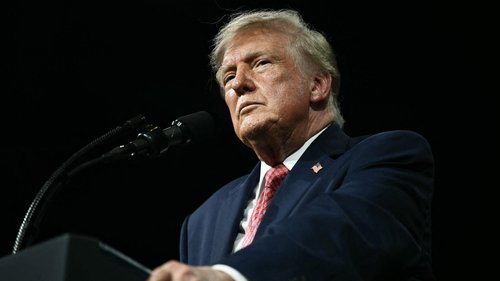
Trump defended the deal as a preventive measure for a global economic crisis. He warned that if the next phase of negotiations failed, the United States would be forced to military action, stating that it would “bomb the hell out of Iran.” However, the administration emphasized that the nuclear settlement was a cornerstone of the agreement and a prerequisite for any final deal.
Iranian President Pezeshkian echoed the message that the deal will stop military operations on all fronts, including in Lebanon, and restore the Strait’s free flow. A however, Iranian parliament speaker Mohammad Bagher Ghalibaf expressed continued distrust, insisting that Iran remains on the verge of confrontation if the US fails to deliver on its promises.
The deal has drawn criticism from both sides of the political spectrum. Republican Senator Bill Cassidy described it as the worst foreign policy blunder in decades, while Republican Senator Ted Cruz decried the $300 billion reconstruction fund as wasteful. Democratic senators, such as Jeanne Shaheen, questioned whether the agreement addressed Iran’s support for Hezbollah and its missile programme.
Ambiguities remain, especially regarding the Strait of Hormuz. While the memorandum stipulates no charges for ships crossing the waterway in a 60‑day period, it leaves the possibility for future tariffs open. Ghalibaf warned that passing the 60‑day period would change the status quo for shipping in the Gulf.
Future steps will require sustained diplomatic effort. The United States will need to coordinate the de‑blending of enriched uranium with the IAEA, rebuild trust with Iranian diplomats, and address multilateral concerns about Iran’s regional influence. How the agreement will evolve in the coming months—and whether it can stave off the risk of renewed conflict—will remain a critical focus for policymakers worldwide.