In brief
In south‑western France, the funeral of Lyhanna, an 11‑year‑old girl murdered two weeks ago, drew a storm of fury as police failure and a suspect’s prior abuse record were revealed. The suspect, Jérôme Barella, had been denied immediate questioning and had a history of alleged sexual violence toward minors. Local residents gathered with the family at Fleurance cemetery, while regional mayors called for solidarity and flags flew at half‑mast. Fresh allegations have emerged against Barella’s father and brother; investigations have begun into a 2019 case of abuse by the elder. The case has ignited nationwide debate over the French justice system’s handling of child‑sex abuse cases, prompting the Justice Minister to defend institutional capacity while the Prime Minister vows tougher legal measures. Protestors plan to rally every Monday outside magistrates’ courts. Public confidence in the ministry has been shaken, though opinion polls show a majority still backs the Justice Minister’s position.
French Town Buries Murdered Child as Questions Mount over Police Failings
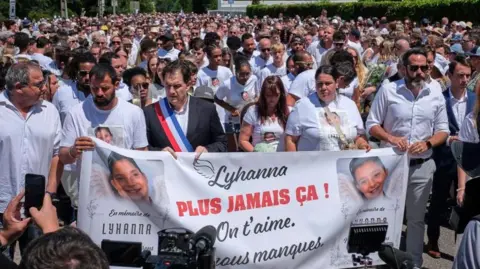
The small town of Fleurance, 50km west of Toulouse, held a funeral for Lyhanna, an 11‑year‑old girl who was murdered two weeks ago. Local residents stood beside the grieving family as the child was laid to rest in the cemetery of this quiet western French town.
The incident has ignited anger across France after revelations that the prime suspect, Jérôme Barella, 41, had been denied police questioning for nine months despite a prior denunciation in August last year for alleged rape of a 10‑year‑old. In 2023, U.S. authorities alerted French police to Barella’s online activity that might indicate access to child sex‑abuse images. The French National Office for Minors (OFMIN) only discovered the signal after a trawl for Barella’s name following his arrest last week. The orange was deemed “weak,” and the office receives around 300,000 signals each year, raising questions about detection thresholds.
New allegations now target Barella’s own family. His brother Yannick faces an investigation for alleged rape of two women, one a minor. The father, Joël, 71, is also under scrutiny after a reopened 2019 case of alleged sexual abuse of a granddaughter. The investigation suggests a pattern of family‑based abuse and raises concerns about systemic oversight.
The case has unfolded amid growing public anxiety about how French justice treats sex crimes against women and minors. The Justice Minister, Gérald Darmanin, has resisted calls for resignation and defended the system’s capacity, citing a failure to prioritize a serious case rather than resource limits. Meanwhile, the Prime Minister, Sébastien Lecornu, promised a stricter legal framework, including longer sentences for child‑rapists and a time limit for investigations into abuse claims.
Campaign groups demand a new overarching law on sexual violence, a new €2.7 bn budget, and plan protests outside courts every Monday. They argue for structural change on the basis that these abuses reveal failures in the existing system. Friends of the victim and civil society leaders cite this tragedy as evidence of a need for sweeping institutional reform.
The suspect’s background emerges in a hostile light: the father, brother, and the suspect himself were all implicated in prior abuse cases. Their alleged bystander roles and uncovered prior denunciations have added to the sense of betrayal by institutions meant to protect children. Punitive measures and new policies will be supervised by the Ministry of Justice and the CPIR, with new legal frameworks to carry the torch forward.
In the meantime, the community continues to mourn and calls for justice. The funeral remains a quiet testament to lost innocence while the nation confronts an unsettling reality of institutional failure and delayed response.