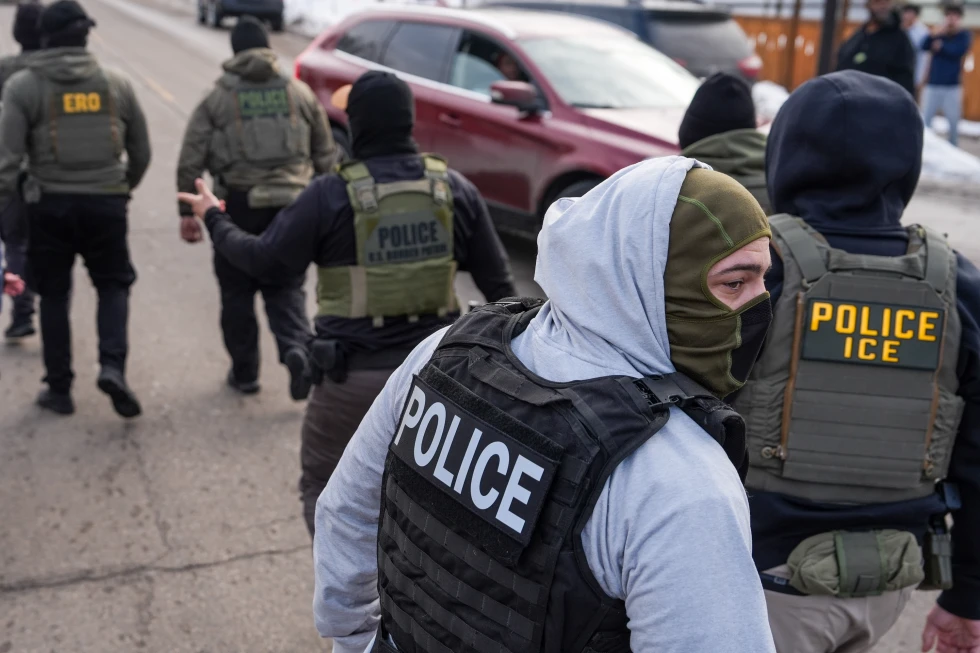
WASHINGTON (AP) — Beyond the car windows being smashed and people tackled on city streets, the images of masked federal officers have become a flashpoint in the Trump administration's immigration enforcement operations.
Not in recent U.S. memory has an American policing operation so consistently masked its thousands of officers from the public—a development the Department of Homeland Security believes is necessary to protect employees from online harassment. However, experts warn that masking serves another purpose: inciting fear and risking the breakdown of norms, accountability, and trust between law enforcement and communities.
The question of whether to ban masks or allow them to persist has emerged as a central debate in Congress regarding funding for Homeland Security, especially as deadlines loom for potential agency shutdowns.
Justin Smith, former Colorado sheriff and current executive director of the National Sheriffs’ Association, expressed concerns about the implications of unidentified federal agents in operations, stating, “Humans read each other’s faces—that’s how we communicate. When you have federal agents involved in operations and they can’t be identified, it tends to make people uncomfortable.”
This situation has led to a rallying cry among Democrats to demand, Cameras on, masks off, insisting on measures to ensure greater accountability during raids and operations. Some are advocating that unmasking officers is a hard line in negotiations surrounding Homeland Security funding.
Amidst soaring numbers in immigration enforcement, particularly under the current administration, concerns over accountability and potential overreach have been amplified. Advocates argue that the presence of masked agents in communities fosters a culture of intimidation that extends beyond those directly involved in immigration issues, affecting the entire atmosphere of trust within neighborhoods.
While some suggest a middle ground might exist, such as allowing officers to wear masks but requiring prominently displayed identifying badges, the debate continues to highlight stark divides over law enforcement practices in immigration enforcement and community relations.
Not in recent U.S. memory has an American policing operation so consistently masked its thousands of officers from the public—a development the Department of Homeland Security believes is necessary to protect employees from online harassment. However, experts warn that masking serves another purpose: inciting fear and risking the breakdown of norms, accountability, and trust between law enforcement and communities.
The question of whether to ban masks or allow them to persist has emerged as a central debate in Congress regarding funding for Homeland Security, especially as deadlines loom for potential agency shutdowns.
Justin Smith, former Colorado sheriff and current executive director of the National Sheriffs’ Association, expressed concerns about the implications of unidentified federal agents in operations, stating, “Humans read each other’s faces—that’s how we communicate. When you have federal agents involved in operations and they can’t be identified, it tends to make people uncomfortable.”
This situation has led to a rallying cry among Democrats to demand, Cameras on, masks off, insisting on measures to ensure greater accountability during raids and operations. Some are advocating that unmasking officers is a hard line in negotiations surrounding Homeland Security funding.
Amidst soaring numbers in immigration enforcement, particularly under the current administration, concerns over accountability and potential overreach have been amplified. Advocates argue that the presence of masked agents in communities fosters a culture of intimidation that extends beyond those directly involved in immigration issues, affecting the entire atmosphere of trust within neighborhoods.
While some suggest a middle ground might exist, such as allowing officers to wear masks but requiring prominently displayed identifying badges, the debate continues to highlight stark divides over law enforcement practices in immigration enforcement and community relations.