MINNEAPOLIS (AP) — Luis Ramirez became increasingly suspicious of two men dressed as utility workers stationed outside his family’s Mexican restaurant in suburban Minneapolis. Their pristine uniforms, marked vehicles with elusive business details, and questionable behavior led Ramirez to question their true purpose.
On Tuesday, he filmed himself approaching the two men, who obscured their identities and seemed equipped with tactical gear beneath their bright yellow vests. This is what our taxpayer money goes to: renting these vehicles with fake tags to come sit here and watch my business, he exclaimed in his video.
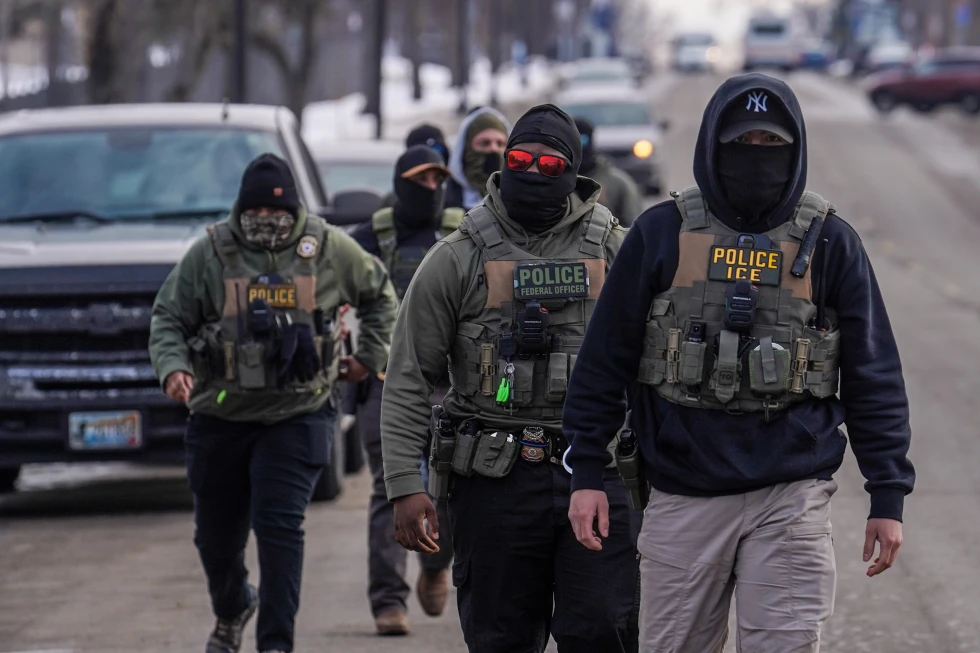
While the Department of Homeland Security and Immigration and Customs Enforcement have not confirmed whether these individuals were federal agents, similar encounters are increasingly reported throughout Minnesota. As immigration enforcement intensifies, numerous accounts detail federal agents disguising themselves as construction workers, delivery drivers, and even activists opposed to ICE activities.
Legal observers note these underhanded tactics are causing widespread alarm in communities already anxious about possible deportations and immigration raids. Naureen Shah from the ACLU articulated concerns, stating, If you have people afraid that the electrical worker outside their house might be ICE, you’re inviting public distrust and confusion on a much more dangerous level.
Such impersonations may signal a strategic response to local activists who monitor ICE operations, which often leads to heightened tensions and problematic confrontations. Activists have documented multiple instances of agents using disguised vehicles, such as pickups with tools or unusual license plates, to remain unnoticed in their operations.
Local immigrant rights organizers report an uptick in these activities, claiming that agents are increasingly employing deceptive methods to circumvent community watchfulness. Despite national scrutiny, the use of such strategies remains legal in many areas of the country.
Amid these developments, community members, including Ramirez, are taking precautions to protect themselves and their livelihoods from possible undercover surveillance threats, expressing a pervasive sense of fear as they navigate daily life.
On Tuesday, he filmed himself approaching the two men, who obscured their identities and seemed equipped with tactical gear beneath their bright yellow vests. This is what our taxpayer money goes to: renting these vehicles with fake tags to come sit here and watch my business, he exclaimed in his video.
While the Department of Homeland Security and Immigration and Customs Enforcement have not confirmed whether these individuals were federal agents, similar encounters are increasingly reported throughout Minnesota. As immigration enforcement intensifies, numerous accounts detail federal agents disguising themselves as construction workers, delivery drivers, and even activists opposed to ICE activities.
Legal observers note these underhanded tactics are causing widespread alarm in communities already anxious about possible deportations and immigration raids. Naureen Shah from the ACLU articulated concerns, stating, If you have people afraid that the electrical worker outside their house might be ICE, you’re inviting public distrust and confusion on a much more dangerous level.
Such impersonations may signal a strategic response to local activists who monitor ICE operations, which often leads to heightened tensions and problematic confrontations. Activists have documented multiple instances of agents using disguised vehicles, such as pickups with tools or unusual license plates, to remain unnoticed in their operations.
Local immigrant rights organizers report an uptick in these activities, claiming that agents are increasingly employing deceptive methods to circumvent community watchfulness. Despite national scrutiny, the use of such strategies remains legal in many areas of the country.
Amid these developments, community members, including Ramirez, are taking precautions to protect themselves and their livelihoods from possible undercover surveillance threats, expressing a pervasive sense of fear as they navigate daily life.