In brief
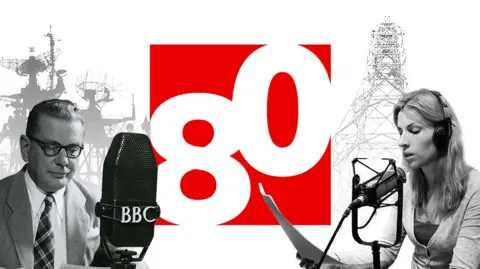
As the BBC Russian service marks its 80th anniversary, it faces intensified censorship under Kremlin control. Established on March 24, 1946, to provide news beyond Soviet propaganda, BBC Russian has continuously adapted to restrictions, from jamming radio broadcasts to navigating internet blocks. Recent challenges include widespread mobile outages and banning popular messaging apps. Despite these adversities, the service continues to reach millions, demonstrating the persistent demand for independent journalism in Russia.
The Kremlin is tightening its grip over what Russians can do and see online, making it harder for outlets like the BBC to reach their audiences. For the past 80 years, BBC Russian has sought to bypass those restrictions, which for decades featured jamming of its short-wave radio broadcasts and now involve blocking its website.The latest restrictions in Russia have included widespread mobile internet outages and a reported plan to block the Telegram news and messaging app. On 24 March 1946, the BBC started its first regular radio broadcast in the Russian language, aiming at giving listeners behind the Iron Curtain in the Soviet Union an alternative to state propaganda and a tightly controlled cultural scene. By 1949, jamming of the signal was already the norm.For almost half the 20th Century, Soviet people had to jump through hoops to listen to foreign broadcasts, and for some it was truly a sport, remembers Natalia Rubinstein, an ex-BBC presenter and former resident of Leningrad, or modern-day St Petersburg. We really wanted to know what was being hidden from us, she says.Jamming of foreign broadcasts was pioneered by Nazi Germany during World War Two, using noise or signals from more powerful transmitters located closer to the listeners. During the Cold War, the BBC would repeat its 90-minute Russian-language bulletin three times a week, so people could listen at least once. Not every broadcast was blocked; according to a CIA memo from 1960, stories about life in Britain or the US went on air without interference, but discussions of global conflicts or reports on the economic and political life in the Socialist bloc were always jammed.Occasionally, BBC Russian succeeded in outfoxing the jammers. Peter Udell, who ran the BBC's East European service, recalls that when Soviet leader Leonid Brezhnev died in 1982, they unexpectedly reappeared on air to cover the news. By 1987, amid the liberal reforms under Mikhail Gorbachev, the team was finally receiving feedback from listeners, a stark contrast to years of operating in the shadows.But as the climate shifted with the outbreak of war in Ukraine, BBC Russian's website was blocked, intensifying the struggle for independent journalism in Russia. A new office was set up in Latvia for journalists to report safely, and they now battle digital blockades to maintain their audience, which has swelled to 12 million a week amid repression of independent news sources. BBC Russian remains a crucial voice for many, reflecting an enduring desire for unbiased reporting in a media landscape filled with state control.