In brief
Explosive Media, a key player in generating viral AI propaganda videos supporting Iran, employs a Lego-style aesthetic to depict the U.S. as an enemy while resonating strongly with social media users. The videos, which often blend current events with satirical elements, provoke discussions on the power and impact of modern digital propaganda. This unique approach, enabling direct communication with Western audiences, represents a shift in the landscape of information dissemination and propaganda in the context of the ongoing US-Iran conflict.
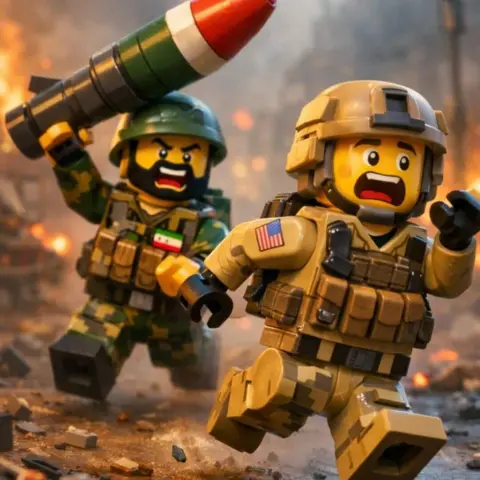
At first glance, they look like they could be scenes out of a Lego movie, although more vivid and fast-paced. However, these viral AI videos, inspired by the instantly recognizable Lego aesthetic, feature dying children, fighter jets, and pro-Iran propaganda starring US President Donald Trump.For the BBC podcast Top Comment, we spoke to a representative of Explosive Media, a major account behind these clips who wishes to remain anonymous and calls himself Mr. Explosive. He initially claimed independence from the Iranian government but later admitted the regime is one of his clients.The overarching theme of these videos is that Iran is resisting the supposed global oppression of the United States. Despite their garishness, the clips have been widely shared and commented on, with millions of views.In one clip, Trump is depicted falling through a whirlwind of documents, while another shows the controversial imagery of George Floyd under a policeman’s boot, presenting Iran as a defender of those wronged by Western systems. Such content has led experts to describe it as a highly sophisticated form of propaganda, termed 'Slopaganda', which aims to resonate with Western audiences.The AI-generated clips are estimated to have been viewed hundreds of millions of times during the war, taking advantage of social media and engaging younger, digitally savvy demographics.As we engaged in a video call, flanked by red and green lights that symbolize the Iranian flag, Mr. Explosive elaborated on the motivation behind using Lego-style graphics: 'It's a world language.' He reveals that their productions are heavily shared among Iranian and Russian state media accounts.Notably, these AI videos are often quick to respond to real-time events, adapting narratives to propagate perspectives beneficial to the Iranian regime amid the ongoing US-Iran conflict. Despite push-back on factual inaccuracies in the content, Mr. Explosive remains steadfast in rejecting critiques, framing his work as a necessary defense against U.S. narratives. Experts warn that such AI-driven propaganda strategies represent a new form of digital diplomacy, with implications that stretch far beyond traditional media's reach, highlighting a significant evolution in how authoritarian governments communicate and shape perceptions on the global stage.