In brief
In an interview, Apollo 17 astronaut Harrison Schmitt discusses the significance of lunar missions and their implications for the future of space exploration. At 90, he reflects on his experiences during the Apollo program and expresses enthusiasm for upcoming missions, including Artemis II. Schmitt explains the need for a lunar base to facilitate further exploration, the unique resources of the Moon, and the potential of helium-3 for energy solutions. He emphasizes the importance of educating new generations and the evolving landscape of space technology.
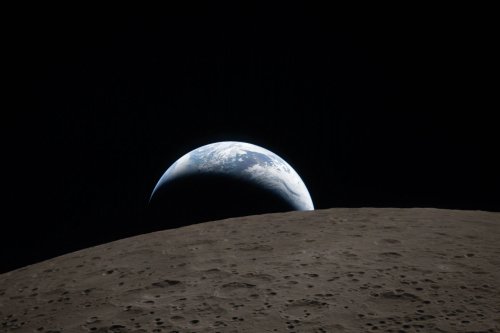
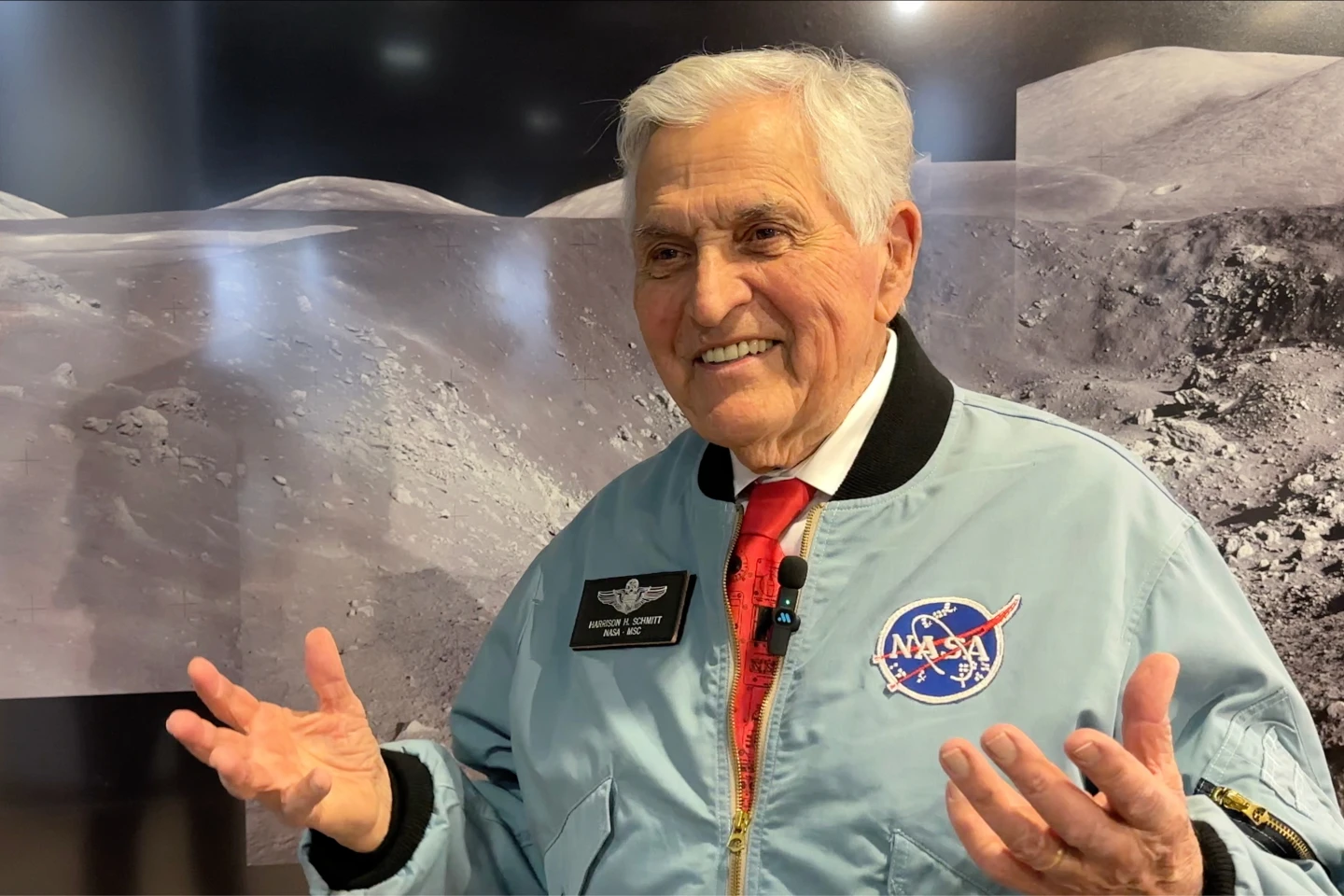
ALBUQUERQUE, N.M. (AP) — Apollo astronaut Harrison “Jack” Schmitt, at 90 years of age, remains optimistic about the future of space exploration. His journey began in 1972 when he and fellow astronaut Eugene Cernan collected rock samples from the Moon's surface during the Apollo 17 mission. Schmitt, a field geologist, was the first scientist to walk on the lunar surface, providing valuable insights into the Moon's origins.
Reflecting on his experiences, Schmitt expresses excitement for the Artemis II mission, which aims to send a crew on a lunar flyby. He feels this mission is a stepping stone for new generations to explore beyond Earth.
In a recent interview, Schmitt highlighted the necessity of establishing a lunar base as a critical step for further missions to Mars. He noted that the Moon holds resources which could make subsequent space missions more cost-effective.
Discussing his past, Schmitt pointed out that Apollo 17's mission involved complex geology in the Taurus-Littrow valley, deeper than the Grand Canyon. His expertise enabled the team to gather significant samples, enhancing our understanding of the solar system.
Schmitt also emphasizes the Moon's role as a historical record, stating that it has been capturing the history of the solar system for 4.5 billion years. He believes the Moon holds keys to understanding life on Earth and our relationship with the Sun.
Additionally, he discussed the potential of helium-3, an isotope abundant on the Moon, as a clean energy source that could revolutionize solar energy and various industries.
Schmitt acknowledges a renewed space race, particularly with interest from countries such as China, and sees helium-3 as a pivotal resource in this competition.
He concludes by expressing his willingness to return to space, whether it be on missions to the Moon or Mars, and emphasizes the importance of fostering educational opportunities for the youth in STEM fields as future explorers.