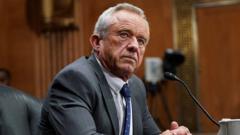
Kennedy's nomination was approved by a Senate committee on Tuesday, marking a key step in his confirmation to become US health secretary. The decision came with a narrow party-line vote of 14-13, where all Republicans supported the vaccine skeptic, who previously dropped his presidential campaign to endorse Donald Trump. He now heads to a full Senate vote controlled by Republicans.
During the hearings, Kennedy faced scrutiny over his views on vaccines and public health, asserting he is not against vaccinations but advocates for stricter safety testing. Nevertheless, many senators questioned his credibility, referencing past comments where he called vaccines "not safe and effective." His association with anti-vaccine sentiments, including merchandise from his previous organization, raised further concerns among Democrats.
Senator Bernie Sanders, an independent working alongside Democrats, initially acknowledged Kennedy's health agenda but later confronted him regarding the negative implications of his advocacy. Despite skepticism, Kennedy garnered critical backing from Louisiana Republican Senator Bill Cassidy, helping pave the way for the upcoming Senate vote.
If confirmed, Kennedy would manage prominent health agencies, such as the CDC and FDA, with plans for potential staffing changes and reforms. However, his stated intention is not to ban vaccines outright or target unhealthy foods, but rather to assess the presence of food additives in the American diet. As the political landscape shifts, all eyes will be on the full Senate's decision regarding Kennedy's nomination.
During the hearings, Kennedy faced scrutiny over his views on vaccines and public health, asserting he is not against vaccinations but advocates for stricter safety testing. Nevertheless, many senators questioned his credibility, referencing past comments where he called vaccines "not safe and effective." His association with anti-vaccine sentiments, including merchandise from his previous organization, raised further concerns among Democrats.
Senator Bernie Sanders, an independent working alongside Democrats, initially acknowledged Kennedy's health agenda but later confronted him regarding the negative implications of his advocacy. Despite skepticism, Kennedy garnered critical backing from Louisiana Republican Senator Bill Cassidy, helping pave the way for the upcoming Senate vote.
If confirmed, Kennedy would manage prominent health agencies, such as the CDC and FDA, with plans for potential staffing changes and reforms. However, his stated intention is not to ban vaccines outright or target unhealthy foods, but rather to assess the presence of food additives in the American diet. As the political landscape shifts, all eyes will be on the full Senate's decision regarding Kennedy's nomination.