In brief
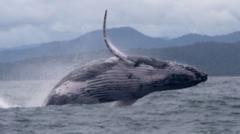
In a groundbreaking discovery, scientists have documented a humpback whale's spectacular migration that spans over 13,000 kilometers, raising questions about the effects of climate change on marine animal behavior. Initially sighted off the Pacific coast of Colombia in 2017, the whale reappeared in 2022 near Zanzibar in the Indian Ocean. Experts are eager to understand the factors driving such an extraordinary voyage, suggesting that altered food availability and potential new mating opportunities could play roles.
According to Ekaterina Kalashnikova from the Tanzania Cetaceans Program, this migration is unprecedented even for a species renowned for its extensive traveling habits. Humpbacks typically journey between tropical breeding grounds and cooler feeding waters annually, but this particular male has showcased an extraordinary route, connecting two distant breeding grounds, indicative of his unique adaptability.The speculation surrounding the whale's migration includes the influence of climate change on krill populations, which humpback whales predominantly feed on. Altered environmental conditions might be pushing these marine giants to seek sustenance elsewhere. Additionally, it is possible that recovering whale populations, as a result of global conservation efforts, are prompting explorations for new breeding sites.Dr. Kalashnikova emphasized the significance of phenomena such as evolving climate patterns and increasingly frequent extreme weather events as potential driving forces for this migration. This whale, originally photographed in 2013 and tracked through various sightings over the years, represents a significant data point in whale behavior studies. The findings stem from an expansive database of whale photographs submitted to the citizen science platform, happywhale.com. It employs advanced artificial intelligence to identify individual whales based on their fluke patterns, enabling researchers to monitor their migratory paths effectively. The full study has been published in the journal, Royal Society Open Science, and it marks a significant contribution to understanding the connection between climate dynamics and whale migratory patterns.For those interested in the secrets of humpback whales, further insights can be found in "The Secrets of Antarctica's Giants" available on BBC iPlayer.