In brief
Iroro Tanshi, a Nigerian ecologist, has been awarded the Goldman Environmental Prize for her dedication to protecting the endangered short-tailed roundleaf bat in Nigeria. Her work evolved after witnessing wildfires threatening the species, converting local perceptions of bats from fear to conservation. Despite cultural beliefs linking bats to witchcraft, Tanshi successfully engaged communities to tackle wildfires, illustrating the species' ecological importance.
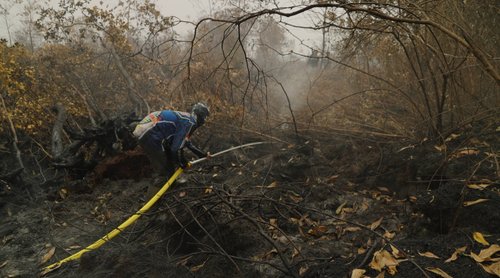
A Nigerian scientist's 'personal experience' with a wildfire, its threat to endangered bats she discovered just days before, and her campaign to protect them, has earned her the prestigious Goldman Environmental Prize. Iroro Tanshi, who works in the Afi Mountain Wildlife Sanctuary in south-eastern Nigeria, noted that witnessing the short-tailed roundleaf bat for the first time in nearly 50 years should have been 'big headliner news.' However, this discovery was overshadowed by the serious issue of wildfires in the region.In a country where bats are often viewed negatively and associated with witchcraft, Tanshi successfully launched a community-led initiative to prevent wildfires in bat habitats. She emphasized the importance of local engagement, stating, 'It's really the question of: 'How do we convince people to protect the habitat?' The wildfire problem was also a community issue—the hook that made people stand up and engage.'Now a postdoctoral researcher at the University of Washington, Tanshi identified human-induced wildfires as a primary threat to the endangered bats. Her team believes the fire that ignited her campaign began when a farmer was clearing land, leading to a blaze that lasted for three weeks until rain finally came.Through her efforts and collaboration with local fire brigades, significant advancements have been made in preventing serious wildfires and educating community members about bat conservation. Tanshi's program harnesses creative media and education to help shift perceptions of bats, stressing their ecological roles such as seed dispersal and pollination.Notably, all six winners of the 2026 Goldman Environmental Prize are women, marking a remarkable milestone in the award's history. Tanshi expressed her gratitude, stating, 'There are very few things in this world that signal to you that the work that you're doing has global relevance than things like this.'