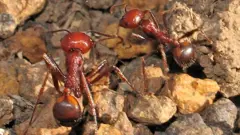
Swarms of giant African harvester ants are currently taking flight in Kenya, particularly around Gilgil at the peak of the mating season. This period has led to a significant rise in illegal ant trafficking, with smugglers exploiting the captured queens, who sell for as much as $220 each on the black market. These highly sought-after insects symbolize a troubling yet burgeoning wildlife trade, previously overshadowed by high-profile crimes against larger animals.
The giant African harvester ants, known scientifically as Messor cephalotes, are not only popular among collectors due to their fascinating behaviors but also because a single queen can establish an entire colony that lasts for decades. The trade became widely recognized last year when Kenyan authorities discovered around 5,000 queen ants illegally housed in a guest house.
Reports from locals involved in the trade indicate a lack of awareness about the legal implications of their actions, underscoring the need for better valuation reforms and education on sustainable practices. With experts warning that the trafficking could pose severe threats to local ecosystems and biodiversity, there’s a rising call for stronger regulations and international monitoring akin to those applied to larger wildlife crimes.
Currently, no ant species is listed under the Convention on International Trade in Endangered Species (CITES), leading many conservationists to urge for protective measures to ensure this growing issue is addressed. Amid conversations on sustainable trade, some believe that ants could become a viable asset if collected responsibly, providing economic benefits to local communities. As the debate continues on the implications of this trend, the timeline for effective regulations in this emerging wildlife trade remains uncertain.
The giant African harvester ants, known scientifically as Messor cephalotes, are not only popular among collectors due to their fascinating behaviors but also because a single queen can establish an entire colony that lasts for decades. The trade became widely recognized last year when Kenyan authorities discovered around 5,000 queen ants illegally housed in a guest house.
Reports from locals involved in the trade indicate a lack of awareness about the legal implications of their actions, underscoring the need for better valuation reforms and education on sustainable practices. With experts warning that the trafficking could pose severe threats to local ecosystems and biodiversity, there’s a rising call for stronger regulations and international monitoring akin to those applied to larger wildlife crimes.
Currently, no ant species is listed under the Convention on International Trade in Endangered Species (CITES), leading many conservationists to urge for protective measures to ensure this growing issue is addressed. Amid conversations on sustainable trade, some believe that ants could become a viable asset if collected responsibly, providing economic benefits to local communities. As the debate continues on the implications of this trend, the timeline for effective regulations in this emerging wildlife trade remains uncertain.