In brief
Samsung's largest union has agreed to suspend a planned strike after reaching a tentative deal, aimed at addressing disputes over profit distribution from AI memory chip production. Workers will vote on the agreement from May 22-27, 2026, amidst fears of disruptions that could impact global supply chains and South Korea’s economy. Samsung’s tentative agreement comes during a time of significant financial growth and competition within the tech sector.
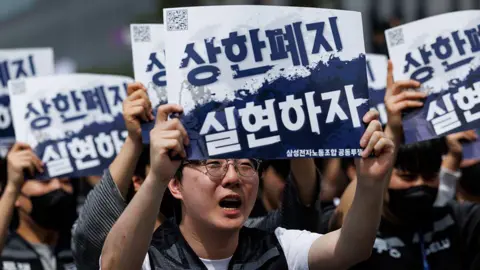
The largest union at Samsung Electronics has suspended a planned strike after reaching a last-minute tentative pay agreement with the South Korean technology giant.
This has temporarily eased fears of disruption at the world's largest memory chipmaker during a boom in the building of artificial intelligence (AI) data centres.
The union, which represents nearly 48,000 workers, said industrial action that was due to begin on Thursday would be suspended while members vote on the deal from 22-27 May.
Here's why a strike could be so disruptive for the global technology industry.
What is the dispute about?
The dispute centres on how to distribute profits generated by soaring demand for AI memory chips.
At issue is the distribution of bonuses between staff in memory chip divisions and those in other units.
Samsung had planned to pay generous bonuses to 27,000 staff making memory chips – at least six times more than its workers making other chips and electronics.
The union said that 23,000 workers who were making less advanced chips for companies like Tesla and Nvidia should not be left behind.
It raised concerns over potential disruption to chip production, with major implications for global supply chains and South Korea's export-driven economy.
Samsung is the world's largest memory chipmaker by sales and a major supplier of chips used in AI data centres, smartphones and laptops.
The broader Samsung Group accounts for roughly a fifth of South Korea's economic output.
The dispute comes at a sensitive moment for the company as it faces intensifying competition from rivals SK Hynix and Micron amid surging AI-driven chip demand that has already strained global supply.
What has Samsung said?
Samsung's operating profit in the January to March quarter jumped about 750% from a year earlier.
Booming demand for AI chips pushed its stock market valuation past $1 trillion (£744 billion) in May.
Last year, rival SK Hynix abolished its bonus pay cap for 10 years.
This led to bonuses more than three times higher than those offered to Samsung employees. Some Samsung workers jumped ship to SK Hynix as a result.
Samsung then proposed that memory chip workers receive bonuses of 607% of their annual salary – higher than SK Hynix - according to transcripts of wage negotiations seen by Reuters.
But employees in other businesses would only receive bonuses of 50% to 100%, according to the documents.
The union also wanted Samsung to abolish a bonus cap of 50% of annual salaries and allocate 15% of annual operating profit to a bonus pool distributed to workers.
Samsung bosses previously flagged that the strike could impact South Korea's economy more broadly, through lower sales, investment outflows and lower tax revenue.
In a statement issued after the tentative deal was agreed, the company said: With a humble attitude, we will build a more mature and constructive labour-management relationship to ensure that such an incident never happens again.
On Thursday morning, Samsung's shares rose by more than 5% after the announcement.
What impact could a strike have?
Such a strike could impact Samsung's operating profit by 21 trillion won to 31 trillion won ($14.08 billion to $20.79 billion; £10.4 billion to £15.4 billion), according to JP Morgan.
However, any walkout is likely to be limited after a South Korean court granted Samsung Electronics an injunction.
The court mandated that necessary staffing levels must be maintained to prevent damage to facilities and quality of products.
The union also faces penalties for any violation of this order, underscoring the delicate balance of labor relations in a critical sector of the global economy.