In brief
Residents of Makoko in Lagos face an ongoing crisis as their homes are demolished in a government operation described by critics as a land grab. Families are displaced amid claims of health and safety risks from nearby power lines. Over 10,000 people are reported displaced as tensions escalate between the community and authorities, with armed police involvement significantly raising concerns regarding safety and human rights.
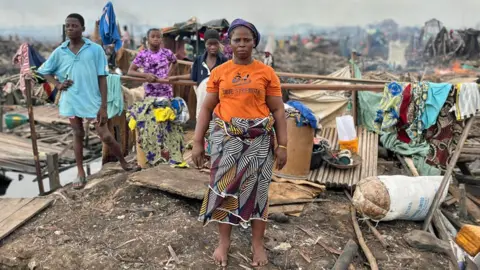
A mother of five, Anna Sobie's wooden home is one of many that has been demolished in a shanty town in a lagoon in Lagos, with critics describing it as a land-grab by the authorities to gentrify the prime waterfront spot in Nigeria's biggest city.
Lagos State government officials deny the allegation, saying they are demolishing parts of Makoko - the country's biggest informal waterfront settlement - because it is expanding near high voltage power lines, posing a major health and safety risk.
Sobie and her children now sleep on the narrow broken platform where their house stood until a few weeks ago on Lagos Lagoon. This is the biggest of 10 lagoons in a mega-city that is facing an acute housing crisis - and where life is becoming increasingly expensive, pushing more people to the margins of society.
As Sobie spoke to the BBC, canoes - steered with paddles or long bamboo poles - moved through the narrow waterways, carrying mattresses and sacks of clothes belonging to the displaced people.
Residents say the demolitions began two days before Christmas, when excavation teams accompanied by armed police moved into sections of the waterfront settlement facing the Atlantic Ocean.
In a joint statement last month, ten non-governmental organisations said that armed thugs, security personnel and demolition teams with bulldozers descended repeatedly on the community to tear down homes, and burn them.
Homes were set on fire with little or no notice, in some cases while residents were still [inside], the NGOs added.
When the BBC visited Makoko, smoke hung in the air from the rubble of torched homes or from fires that people had lit, burning damp wood to dry their clothes.
Excavators were at work along the shoreline - houses built on wooden stilts over the lagoon were still being pulled down, their planks collapsing into the water below. As the government insists on the necessity for safety, the residents demand recognition of their rights and stability.
With the lagoon central to their lives, they have protested against the move to force them out of Makoko. More than a thousand residents marched to the state legislature seeking dialogue, only to confront police firing tear gas and leading to injuries. Critics emphasize the rapid and violent nature of these evictions and highlight the stark conditions faced by displaced families like Sobie's.
The state claims financial compensation will be provided, but skepticism prevails among residents, as many remain fearful of losing not just homes but their way of life.