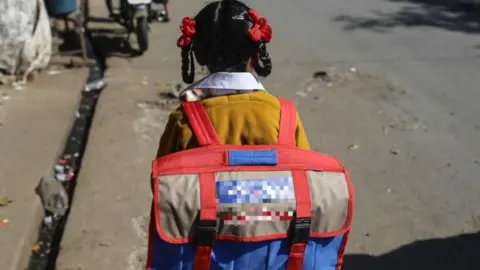
Pooja* was 16 years old when she was accused of murdering her mother. The teenager, who lived with her alcoholic stepfather in a poor neighbourhood in Uttar Pradesh, was arrested in 2018 and sent to jail. Her lawyer informed the police that Pooja was a minor, but she was never produced before the Juvenile Justice Board (JJB) within the mandated 24 hours.
JJBs, consisting of a principal magistrate and two social workers, are responsible for determining if minors aged 16-18 should be tried as adults for serious crimes, a legal provision that emerged after the 2012 Delhi gang rape case. Instead of being assessed by a JJB, Pooja spent six years in prison, where not one check was carried out on her detention by the JJB.
In 2024, her case was finally transferred to a JJB, which confirmed her status as a minor. She was released, having served three years more than the maximum sentence for juveniles. Pooja’s story is not unique; it's a reflection of a broken system.
Experts emphasize that India's juvenile justice law, designed for child protection and rehabilitation, is poorly implemented. The country has had almost four decades to fine-tune its laws, yet many minors continue to suffer from systemic oversights. The India Justice Report revealed that as of 2023, over half of cases pending before JJBs were unresolved, with many lacking full teams as mandated by law.
Critics note the absence of accurate data and records, further undermining the potential for reform and rehabilitation. Instances of violence and poor facility conditions persist in child care institutions, which are meant to provide sanctuary and education.
Organizations like Echo counteract these systemic failures by offering vocational training and counselling that have seen actual changes in the lives of youth like Darshan*, who turned his life around after a stay there.
Every child deserves a second chance, yet India's juvenile justice framework continues to fall short of its promise, leaving many young offenders in dire situations without proper support or oversight.
JJBs, consisting of a principal magistrate and two social workers, are responsible for determining if minors aged 16-18 should be tried as adults for serious crimes, a legal provision that emerged after the 2012 Delhi gang rape case. Instead of being assessed by a JJB, Pooja spent six years in prison, where not one check was carried out on her detention by the JJB.
In 2024, her case was finally transferred to a JJB, which confirmed her status as a minor. She was released, having served three years more than the maximum sentence for juveniles. Pooja’s story is not unique; it's a reflection of a broken system.
Experts emphasize that India's juvenile justice law, designed for child protection and rehabilitation, is poorly implemented. The country has had almost four decades to fine-tune its laws, yet many minors continue to suffer from systemic oversights. The India Justice Report revealed that as of 2023, over half of cases pending before JJBs were unresolved, with many lacking full teams as mandated by law.
Critics note the absence of accurate data and records, further undermining the potential for reform and rehabilitation. Instances of violence and poor facility conditions persist in child care institutions, which are meant to provide sanctuary and education.
Organizations like Echo counteract these systemic failures by offering vocational training and counselling that have seen actual changes in the lives of youth like Darshan*, who turned his life around after a stay there.
Every child deserves a second chance, yet India's juvenile justice framework continues to fall short of its promise, leaving many young offenders in dire situations without proper support or oversight.