In brief
India's aviation market is expanding rapidly, with major airlines like IndiGo and Air India ordering nearly 1,500 new planes in the coming decade. As the country looks to lessen dependency on foreign aircraft manufacturers like Boeing and Airbus, a recent agreement with Russia to produce the SJ-100 plane raises questions about India's capability in building passenger jets domestically. Although the initiative presents a potential breakthrough, significant hurdles still lie ahead before it can materialize.
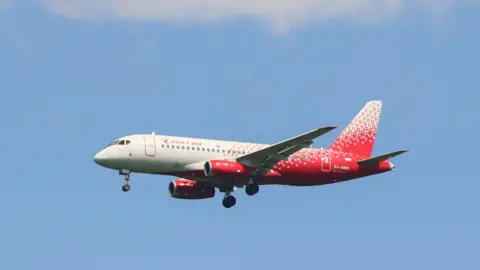
India is one of the world's fastest-growing aviation markets. IndiGo and Air India, which together hold over 90% of the market, have ordered nearly 1,500 planes over the next decade, highlighting soaring passenger demand. This expansion hinges on Boeing and Airbus, which together supply 86% of the world's aircraft and faced historically high delivery backlogs in 2024 - delays expected to affect Indian orders too.This has revived an old question: should India try to build its own passenger planes? The prospect drew attention in October, when India and Russia signed an initial agreement in Moscow to manufacture the SJ-100 passenger plane in India, raising hopes for domestic aircraft production. But is the Russia deal a solution? Its joint manufacturing plan still faces many hurdles before coming to fruition.The SJ-100 is a twin-engine aircraft that can carry up to 103 passengers and is already in service with several Russian airlines, according to its manufacturer, United Aircraft Corporation (UAC). Delhi has described the aircraft as a game changer and plans to use it for short-haul routes. But experts have questioned the project's cost and feasibility - much of which is still unclear. One of the biggest concerns is whether the Russian firm would be able to rapidly set up and scale production in India.India's long-standing aspiration to manufacture passenger aircraft has seen limited success thus far. The National Aerospace Laboratories (NAL) was established in 1959 but has only developed small aircraft. Historical attempts at collaboration with foreign manufacturers yielded some results but did not focus on larger passenger planes. Recent projects like the Regional Transport Aircraft (RTA) have encountered significant delays and challenges.Experts believe the SJ-100 project could potentially be a game-changer for India's aviation manufacturing landscape, providing a practical approach given that domestic projects are still far from completion. However, as the deal comes with its own challenges, concerns about the impact of international sanctions loom large over the project's execution. With rapid expansion of the aviation market, addressing the demand for aircraft availability and trained manpower remains crucial for India's future in aerospace.