In brief
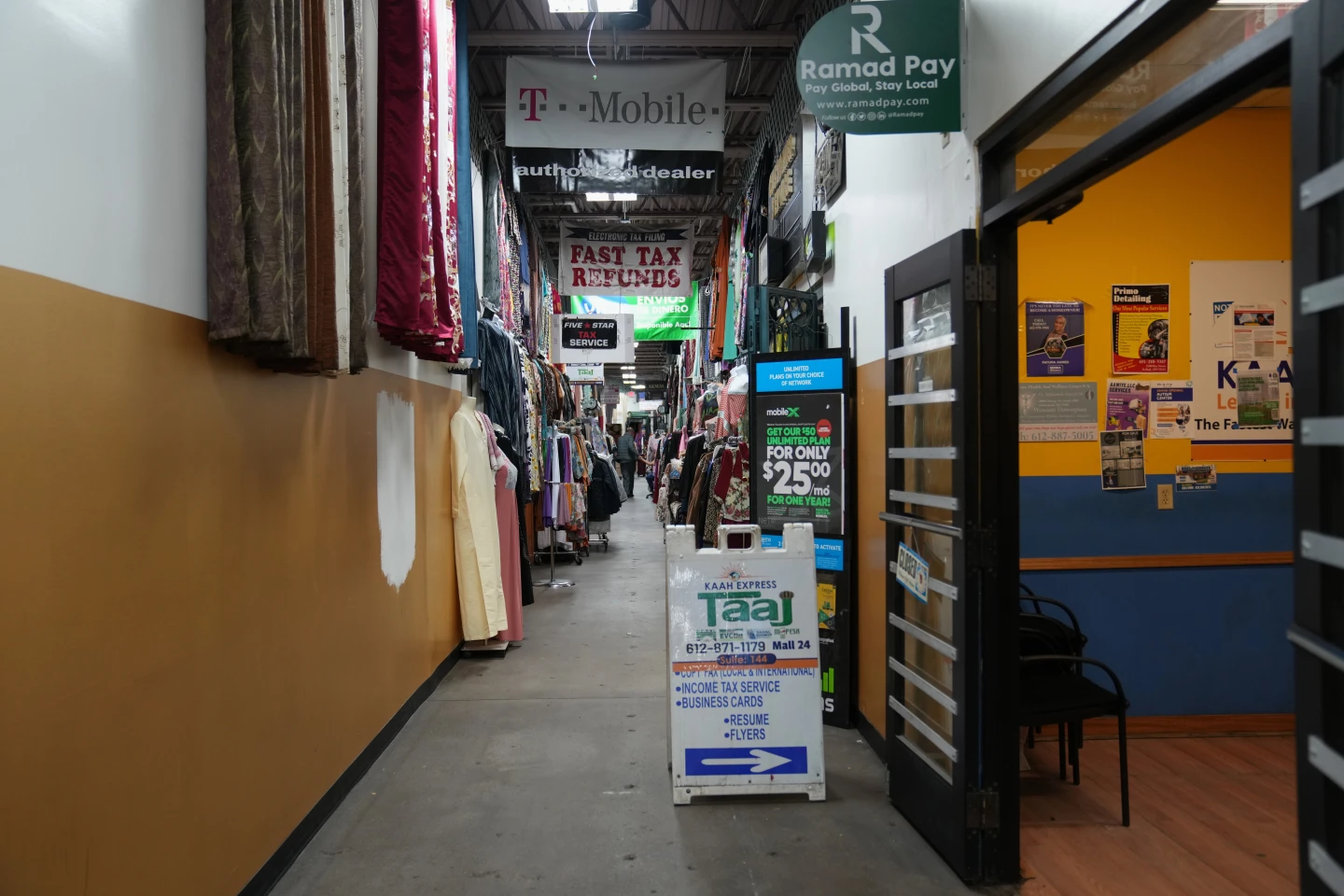
In south Minneapolis, Karmel Mall is noticeably quiet, with many Somali-owned businesses shuttered as a federal immigration crackdown instills fear among sellers and customers alike. Despite once bustling afternoons, vendors like Abdi Wahid report a drastic decline in foot traffic and sales, with some businesses closing altogether. Community leaders express that the current climate impacts both immigrants and citizens, leading to a significantly altered neighborhood dynamic and economic hardship.
MINNEAPOLIS – Rows of businesses remain shuttered at Karmel Mall, a bustling Somali business complex in south Minneapolis. Once vibrant with activity, the mall is eerily quiet, underscoring the profound effects of a recent federal immigration crackdown.
Abdi Wahid, who works at his mother’s convenience store, expressed despair over the situation. It’s been like this for three weeks now. Everywhere it’s all been closed up, all the stores,” he said, reflecting the anxiety felt by the Somali and broader immigrant communities. The fear of federal immigration agents looms large, discouraging not only customers but even business owners from opening their doors.
With more than a hundred small vendors, Karmel Mall serves as an economic hub for the largest Somali population in the United States, also providing housing and community services. However, the atmosphere has shifted dramatically after several controversial incidents involving immigration enforcement, causing many to avoid the area altogether.
The psychological impact extends beyond noncitizens; even U.S. citizens express fear of being targeted based solely on their race. Many cite recent high-profile arrests and tragic events, such as the killing of Renee Good, as pivotal moments that exacerbated their concerns.
Bashir Garad, who operates Safari Travel & Accounting Services, highlighted the cancellations he’s faced as clients fear being barred from re-entry into the U.S. after travel. They see a lot of unlawful things going on in the city, he shared. If there’s a criminal, there’s a criminal. But to marginalize the community’s name, that is unlawful.”
Electronics seller Ibrahim Dahiye noted a staggering drop in business. Winter has always been slow, but now it’s totally different. No one comes here, he lamented, revealing cumulative losses of $20,000 monthly. He emphasized the uncertainty of the situation, underscoring a community in crisis.
As the Somali community grapples with the fallout of this crackdown, local leaders are advocating for support and understanding, reiterating the importance of due process and due dignity for all immigrant communities.