In brief
Residents of Aceh, Indonesia, are raising white flags in a dramatic plea for help following catastrophic floods triggered by a rare cyclone. With the government's response deemed insufficient, many are without access to clean water, food, and medical supplies. Despite President Prabowo Subianto's refusal of foreign aid, protests are growing as the situation worsens, reminiscent of the 2004 tsunami disaster.
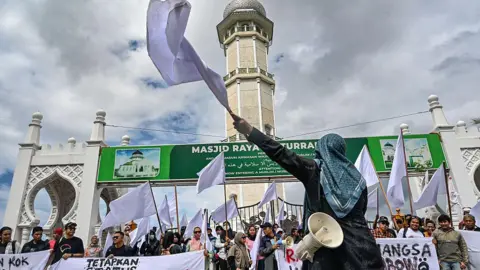
For weeks now, angry and distressed residents in Indonesia's westernmost province have been raising white flags over the state's slow response to a series of deadly floods.Triggered by a rare cyclone in November, the deluge killed more than 1,000 people and displaced hundreds of thousands across the island of Sumatra. In Aceh, the worst-hit province which accounted for nearly half of the deaths, many still do not have ready access to clean water, food, electricity, and medical supplies.In a sign of just how frustrating managing the crisis has become, the governor of North Aceh broke down publicly earlier this month.Does the central government not know [what we're experiencing]? I don't understand, a tearful Ismail A Jalil said in front of cameras.But President Prabowo Subianto has refused foreign aid, insisting the situation is under control.Indonesia is capable of overcoming this disaster, he told his cabinet last week. Prabowo has also ignored calls to declare it a national disaster, which would unlock emergency funds and streamline relief efforts.Prabowo's administration has increasingly been criticised as reactive, disorganised, and out of touch. This perception has marred his presidency, which he won in February 2024 on the back of populist pledges.His flagship billion-dollar free school meals program has been mired in controversy over mass food poisonings. Already this year, protesting citizens reflected rising frustrations over unemployment and living costs, marking significant unrest.Now, the crisis stemming from November's floods has become another challenge for the leader; however, his approval ratings remain steady at around 78%.Last Thursday, dozens of protesters rallied in Aceh's capital, Banda Aceh, waving white flags and demanding that the central government opens the door to foreign aid. A poignant message was displayed by a little girl holding a sheet of paper that read: I am just three years old, I want to grow up in a safe and sustainable world.The white flags, typically emblematic of surrender, have become a symbol of distress; they represent a call for international solidarity, according to those protesting.The flags do not mean we are giving in. They are a distress signal to grab the attention of friends outside, to let them know the conditions in Aceh today are very bad, said Husnul Khawatinnissa, a protester.With entire villages decimated and ongoing road and infrastructure damage, survivors recount experiences of illness and starvation.Provincial authorities have sought assistance from the United Nations, with the Aceh governor welcoming external help.Prabowo's administration claims that relief efforts are underway on a national scale, having disbursed approximately 60 trillion rupiah (about 3.6 billion USD) for reconstruction efforts.For many in Aceh, this flooding evokes memories of the 2004 Boxing Day tsunami. The quick response from the international community at that time starkly contrasts with the current slow aid process, leading to feelings of helplessness among residents.Various nations have extended offers of aid, but these efforts have reportedly been stymied by the central government's rejection, which they justified as part of maintaining national sovereignty.Critically, experts have noted that the president's refusal to accept international help may stem from a desire to project authority and control, even as the situation continues to deteriorate on the ground. As one resident states, It has been very painful and miserable. Everything has come to a complete standstill, from markets to schools to offices.\