In brief
In response to a significant deterioration in air quality in Delhi, authorities have mandated hybrid classes for primary students and imposed a ban on non-essential construction activities. The situation has been exacerbated by PM2.5 levels soaring to 438, nearly 30 times above the World Health Organization's safe limit. Doctors urge residents, especially vulnerable populations, to limit outdoor activities amidst these hazardous conditions.
Schools in Delhi have been asked to run hybrid classes for primary students and non-essential construction activity has been banned as air quality worsens in the Indian capital.
On Tuesday, authorities enforced stricter anti-pollution measures which include limiting movement of goods carriers in the capital and its suburbs.
Delhi's air quality has deteriorated to 'severe' levels according to authorities, which can affect healthy people and seriously impact those with existing diseases.
On Wednesday, the capital's PM2.5 levels in the air reached 438, according to the Central Pollution Control Board - dangerously high concentrations of fine particles that can clog the lungs.
This is nearly 30 times higher than the World Health Organisation's safe limit and about eight times higher than India's national average. The WHO considers a 24-hour average of no more than 15 to be safe.
Doctors have advised people - especially children and the elderly - to avoid going outdoors unless absolutely necessary and to wear protective masks if they do.
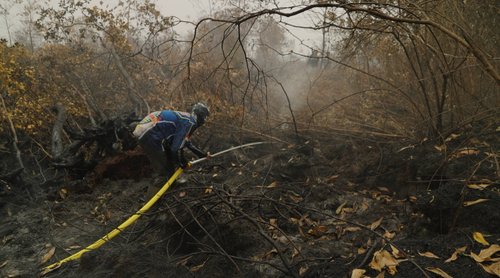
Toxic air quality is a recurring problem in Delhi and across parts of northern India during the winter. The problem stems from factors such as low wind speeds, industrial emissions, vehicle exhaust, dropping temperatures, and the seasonal burning of crop stubble in neighbouring states.
The Delhi government enforces special measures known as the Graded Response Action Plan (GRAP) to contain pollution levels. Stage three of these measures was implemented on Tuesday, banning mining activity, stone crushing, and prohibiting the movement of vehicles carrying dust-generating materials.
The worsening air quality led to a people's protest in the capital last weekend and sparked a political row. On Tuesday, Saurabh Bhardwaj, a leader of the opposition Aam Aadmi Party (AAP) accused the Delhi government of 'manipulating' air quality data and failing to protect public health.
The Bharatiya Janata Party (BJP)-ruled Delhi government denied these allegations, asserting that they are working diligently to combat pollution.
'Our government is working with full seriousness and promptness towards pollution control,' Chief Minister Rekha Gupta stated. Delhi Environment Minister Manjinder Singh Sirsa emphasized that air quality data is publicly available and that water was sprinkled near air quality monitors solely to reduce dust, not manipulate readings.