Bulgaria - the poorest country in the European Union - has become the 21st member of the eurozone, leapfrogging more obvious and prosperous candidates such as Poland, the Czech Republic, and Hungary. This transition is seen by many urban, young, and entrepreneurial Bulgarians as a hopeful and potentially lucrative leap towards deeper integration in the European mainstream, following its NATO and EU membership and the pursuit of joining the Schengen zone.
However, the replacement of the Bulgarian lev with the euro provokes fear and resentment among older and more conservative segments of the population. The lev has been Bulgaria's currency since 1881 and has been pegged to other European currencies since 1997.
Opinion polls indicate that the public is fairly evenly split on the adoption of the euro, with political instability complicating the transition. Prime Minister Rosen Zhelyazkov's coalition recently lost a confidence vote amid mass protests over the national budget, highlighting the unrest surrounding the economic changes.
Some citizens, like Todor, a small business owner, express strong opposition to the euro, estimating that a majority would vote against it in a referendum—a proposal that was rejected by the current government. Others, however, believe the transition will benefit trade, particularly as many prices in Bulgaria have already been marked in euros, easing adaptation.
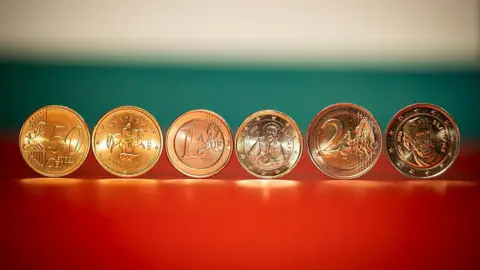
The transition period allows payments in both lev and euros throughout January, but from February 1, transactions will exclusively be in euros. Prices are expected to remain stable or even reduce for certain services, with measures in place to prevent inflation-related price hikes. The choice of designs for the new euro coins incorporates Bulgarian symbols to reassure citizens of their national identity amidst the change.
The overall impact of the new currency remains a topic of concern across Bulgaria. Citizens are watching closely to see if the country will emulate the successful euro reforms in the Baltic states or fall into stagnation akin to Italy.
However, the replacement of the Bulgarian lev with the euro provokes fear and resentment among older and more conservative segments of the population. The lev has been Bulgaria's currency since 1881 and has been pegged to other European currencies since 1997.
Opinion polls indicate that the public is fairly evenly split on the adoption of the euro, with political instability complicating the transition. Prime Minister Rosen Zhelyazkov's coalition recently lost a confidence vote amid mass protests over the national budget, highlighting the unrest surrounding the economic changes.
Some citizens, like Todor, a small business owner, express strong opposition to the euro, estimating that a majority would vote against it in a referendum—a proposal that was rejected by the current government. Others, however, believe the transition will benefit trade, particularly as many prices in Bulgaria have already been marked in euros, easing adaptation.
The transition period allows payments in both lev and euros throughout January, but from February 1, transactions will exclusively be in euros. Prices are expected to remain stable or even reduce for certain services, with measures in place to prevent inflation-related price hikes. The choice of designs for the new euro coins incorporates Bulgarian symbols to reassure citizens of their national identity amidst the change.
The overall impact of the new currency remains a topic of concern across Bulgaria. Citizens are watching closely to see if the country will emulate the successful euro reforms in the Baltic states or fall into stagnation akin to Italy.