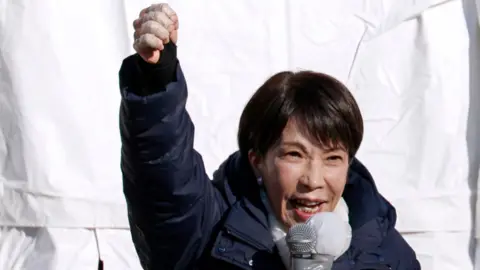
Japan heads to the polls again on Sunday for its second general election in as many years, catching political parties and the electorate by surprise. Prime Minister Sanae Takaichi, the nation’s first female leader, is navigating a complex political landscape characterized by low approval ratings for her party and economic concerns among voters.
Takaichi, who took office last October, is banking on her popularity and a positive public image to overcome the hurdles her party, the Liberal Democratic Party (LDP), faced previously. Her personal approval ratings have soared, with polls indicating significant support. Analysts suggest her tactics and presence could be key factors influencing the election outcome.
The timing of the snap election has attracted criticism from opposition parties, who argue it distracts from pressing issues like inflation and the upcoming fiscal budget. However, Takaichi aims to consolidate her party’s power, seeking to deliver a clear mandate that her predecessor failed to achieve.
While she has drawn attention for her dynamic international engagements and public charisma, Takaichi also faces challenges such as rising costs of living that weigh heavily on the minds of voters. Concerns around inflation and stagnant wages linger as Japan's economy grapples with broader implications of its policies and relationship with neighboring countries, particularly China.
Voter turnout remains uncertain, with winter weather complicating the electoral landscape further. As the election date approaches, many will watch closely whether Takaichi’s gamble pays off, shaping both her future and that of the party she represents.
Takaichi, who took office last October, is banking on her popularity and a positive public image to overcome the hurdles her party, the Liberal Democratic Party (LDP), faced previously. Her personal approval ratings have soared, with polls indicating significant support. Analysts suggest her tactics and presence could be key factors influencing the election outcome.
The timing of the snap election has attracted criticism from opposition parties, who argue it distracts from pressing issues like inflation and the upcoming fiscal budget. However, Takaichi aims to consolidate her party’s power, seeking to deliver a clear mandate that her predecessor failed to achieve.
While she has drawn attention for her dynamic international engagements and public charisma, Takaichi also faces challenges such as rising costs of living that weigh heavily on the minds of voters. Concerns around inflation and stagnant wages linger as Japan's economy grapples with broader implications of its policies and relationship with neighboring countries, particularly China.
Voter turnout remains uncertain, with winter weather complicating the electoral landscape further. As the election date approaches, many will watch closely whether Takaichi’s gamble pays off, shaping both her future and that of the party she represents.