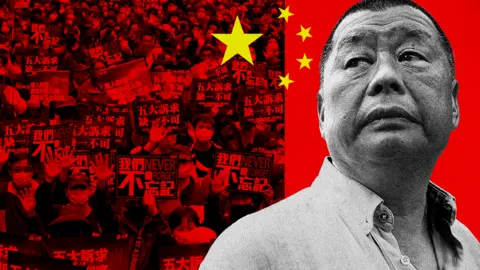
On a winter morning in 2022, Raphael Wong and Figo Chan visited Jimmy Lai at Hong Kong's Stanley prison. Lai, once a media billionaire and influential figure in the pro-democracy protests of 2019, had been incarcerated under national security charges, a stark contrast to the lavish meals they once enjoyed together.
Lai, who had spent decades advocating for democracy in Hong Kong, found himself in a maximum-security prison instead of the bustling streets where millions protested for freedom. His impact was significant; he utilized his media platform, Apple Daily, to challenge the Communist Party, a move that ultimately cost him his freedom.
Denying all allegations against him, Lai stated, I wanted to continue to have the freedom this city has given me. His commitment to the city stemmed from his journey as an immigrant fleeing the oppressive regime of China. Despite being a UK citizen, he chose to stand his ground in Hong Kong, viewing his activism as a form of redemption.
The courts found Lai guilty of colluding with foreign forces—charges he vigorously denied. The verdict has been met with mixed reactions, highlighting the ongoing divide regarding freedom and repression in Hong Kong, where dissent has significantly dwindled since Beijing's implementation of a national security law in 2020.
His family's concerns for his health continue to grow, as Lai's diabetes management in prison raises alarms. The legacy of Lai's fight for democracy remains a narrative of a city caught in the tug-of-war between its quest for freedom and the tightening grip of the Communist Party.