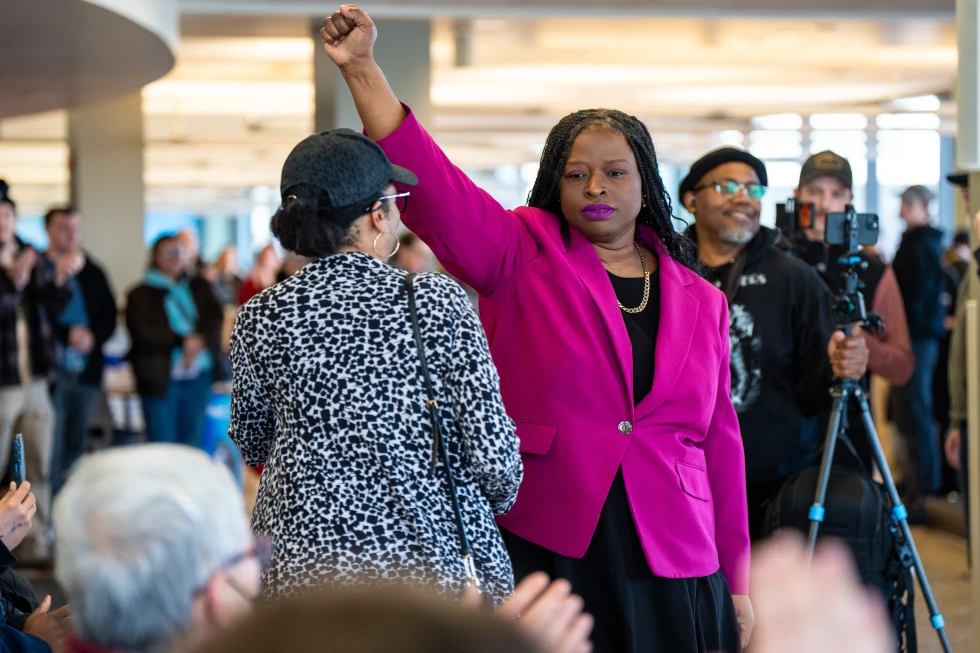
MINNEAPOLIS (AP) — A Minnesota activist charged for her role in an anti-Immigration and Customs Enforcement (ICE) protest at a church released a video of her arrest, striking back against a manipulated image shared by the White House.
On Thursday, the White House posted a photo on its X page depicting civil rights attorney Nekima Levy Armstrong crying with her hands bound, named as 'far-left agitator' responsible for 'orchestrating church riots' in Minnesota. Secretly, the image was altered to evoke an emotional response. A concurrent post from Homeland Security Secretary Kristi Noem contrasted this, displaying Levy Armstrong with a neutral demeanor.
Levy Armstrong, alongside St. Paul School Board member Chauntyll Allen, was arrested on Thursday during a protest that disrupted a church service where ICE officials were present, including a pastor. Both were released the following day, with legal representatives refusing to provide comments. Levy Armstrong's husband, Marques, filmed the arrest, capturing chilling moments as federal agents approached her.
“I'm asking you to please treat me with dignity and respect,” she appealed to the agents during the video. One officer responded, “We have to put you in handcuffs,” while recording the exchange. “It’s not going to be on Twitter,” the agent told her when she asked them not to film the situation.
The video lasts over seven minutes, showcasing Levy Armstrong's calm dialogue with agents while being taken into custody. Throughout, she voiced her dismay, including lines like, “This is a significant abuse of power,” in her protest against ICE's actions.
In comments shared later with the media by Levy Armstrong's spokesperson, she accused the Trump administration of manipulating images to construct a misleading narrative during her arrest. “We are being politically persecuted for speaking out against authoritarianism and the tyranny of the Trump administration,” she stated.
Despite requests for comment, the Department of Homeland Security has not yet replied to inquiries regarding this incident.
This incident raises important implications concerning freedom of speech and the treatment of activists, questioning how visuals can be manipulated for political agendas and the larger narrative surrounding immigration enforcement.