In brief
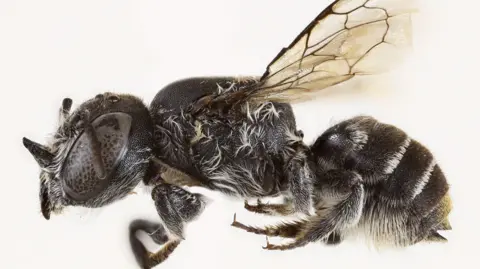
Researchers in Australia have identified a new species of native bee, dubbed Megachile Lucifer, recognized for its small devil-like horns. Found in the Bremer Ranges of Western Australia, the female bee's horns may serve various purposes, including defense and foraging. The species is named after the popular Netflix show 'Lucifer' as an homage to its distinctive features. The discovery emphasizes the need for conservation efforts for both the bee and the endangered plants in its natural habitat.
Australian scientists have discovered a new native bee species with tiny horns - and given it a suitably devilish name.
Researchers found the Megachile Lucifer while observing a rare wildflower that only grows in the Bremer Ranges in Western Australia's Goldfields region, located 470km (292 miles) east of Perth.
The 'highly distinctive, prominent horns' are only present on the female bee and may function as a defense mechanism, to gather pollen or nectar, or to collect materials such as resin for nests.
The study's lead scientist, Dr. Kit Prendergast, shared that the name 'Lucifer' was inspired by the time she spent watching the popular Netflix series while documenting the species, marking it as the first new member of the Megachile group in 20 years.
The female had these incredible little horns on her face, said Dr. Prendergast. When writing up the new species description I was watching the Netflix show Lucifer at the time, and the name just fit perfectly. I am also a huge fan of the Netflix character Lucifer so it was a no-brainer.
Lucifer translates to 'light bringer' in Latin and serves as a metaphor to highlight the urgent need for conservation of native bee species and the importance of understanding how endangered plants are pollinated.
The findings, published in the Journal of Hymenoptera Research, also called for formal protections for the area where the new species and rare wildflowers were found, emphasizing the risks posed by habitat disturbance and climate change.
Unfortunately, many mining companies overlook the impact of their operations on native bees, potentially leading to undiscovered species that play crucial roles in conserving threatened plants and ecosystems.
Without knowing which native bees exist and what plants they depend on, we risk losing both before we even realize they're there, Dr. Prendergast concluded.
}