Shwe Kokko, or Golden Raintree, emerges from the Burmese countryside like an optical illusion, offering a stark contrast to the surrounding poverty and civil conflict in Myanmar's Karen State. Initially a quiet enclave marred by war, this promised city has transformed over eight years into a troubling yet glitzy destination, purportedly attracting wealthy visitors yet largely showcasing scams and criminal enterprises.
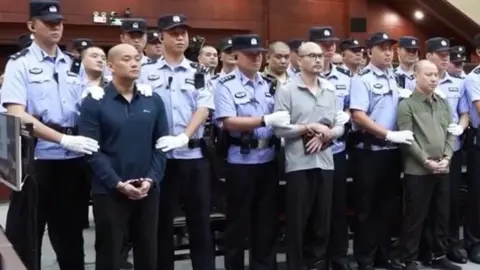
At the helm is She Zhijiang, the mastermind whose ambitions led to the city’s establishment, now incarcerated in Bangkok and awaiting extradition on serious charges. Yatai, the company behind Shwe Kokko, paints itself as a legitimate resort, eagerly courting Chinese tourists despite serious allegations of running fraud and human trafficking operations.
Accessing Shwe Kokko is a treacherous endeavor. Since construction began, it has remained largely off-limits due to the ongoing civil war and resultant violence, requiring a complicated journey through multiple checkpoints. Journalists were recently invited by Yatai, which aims to reshape the city's negative image and diminish public suspicion surrounding Zhijiang’s legal troubles.
The aesthetic of Shwe Kokko, punctuated by grandiose buildings and streets, evokes a provincial Chinese city, though the clientele appears sparse. Official claims that there are no scams or forced labor in Shwe Kokko are contradicted by local testimonies. Work conditions in scam operations remain grueling, with individuals often coerced into deception around the globe, notably targeting the elderly in online schemes.
Amidst the claims of legitimacy, the reality painted by witnesses reveals a thriving underground operation that systematically exploits vulnerable populations, shrouded within walled compounds. The city, besieged by allegations of facilitating scams, struggles to maintain the influx of investment and visitors it desperately requires for survival.
Despite Yatai’s attempts to craft a more palatable narrative, including grand promotional visions of a glimmering city, it cannot escape the reality that its economic lifeblood circles around illicit activities. As Thailand tightens its regulations and cuts utility access, the future of Shwe Kokko hangs in balance, with questions lingering about its sustainability.
Governed by lawlessness and fueled by conflicts involving various factions along the border, Shwe Kokko serves as a window into a grim reality — where aspirations clash with ethical erosion, and criminal enterprises thrive in the shadows. The aspirations for transformation and redemption laid by She Zhijiang appear increasingly improbable, raising doubts about whether the city may transcend its dubious origins or succumb to its sinister fate amidst ongoing crackdowns on scams. As the Thai and Chinese governments intensify their efforts, the pressing question remains: what will become of this illusory city caught in a turbulent storm?
At the helm is She Zhijiang, the mastermind whose ambitions led to the city’s establishment, now incarcerated in Bangkok and awaiting extradition on serious charges. Yatai, the company behind Shwe Kokko, paints itself as a legitimate resort, eagerly courting Chinese tourists despite serious allegations of running fraud and human trafficking operations.
Accessing Shwe Kokko is a treacherous endeavor. Since construction began, it has remained largely off-limits due to the ongoing civil war and resultant violence, requiring a complicated journey through multiple checkpoints. Journalists were recently invited by Yatai, which aims to reshape the city's negative image and diminish public suspicion surrounding Zhijiang’s legal troubles.
The aesthetic of Shwe Kokko, punctuated by grandiose buildings and streets, evokes a provincial Chinese city, though the clientele appears sparse. Official claims that there are no scams or forced labor in Shwe Kokko are contradicted by local testimonies. Work conditions in scam operations remain grueling, with individuals often coerced into deception around the globe, notably targeting the elderly in online schemes.
Amidst the claims of legitimacy, the reality painted by witnesses reveals a thriving underground operation that systematically exploits vulnerable populations, shrouded within walled compounds. The city, besieged by allegations of facilitating scams, struggles to maintain the influx of investment and visitors it desperately requires for survival.
Despite Yatai’s attempts to craft a more palatable narrative, including grand promotional visions of a glimmering city, it cannot escape the reality that its economic lifeblood circles around illicit activities. As Thailand tightens its regulations and cuts utility access, the future of Shwe Kokko hangs in balance, with questions lingering about its sustainability.
Governed by lawlessness and fueled by conflicts involving various factions along the border, Shwe Kokko serves as a window into a grim reality — where aspirations clash with ethical erosion, and criminal enterprises thrive in the shadows. The aspirations for transformation and redemption laid by She Zhijiang appear increasingly improbable, raising doubts about whether the city may transcend its dubious origins or succumb to its sinister fate amidst ongoing crackdowns on scams. As the Thai and Chinese governments intensify their efforts, the pressing question remains: what will become of this illusory city caught in a turbulent storm?