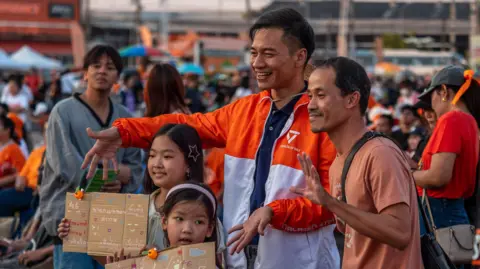
Suttasitt Macky Pottasak is a typical candidate of Thailand's People's Party: young, idealistic and hardworking. He gave up a career in TV drama production in Bangkok to run in the last election, winning a rural seat near his home city of Nakhon Ratchasima from an old, established political family. He has adopted the hat and flag of Luffy, the main character in the Japanese anime series One Piece, which has featured in recent youth protests in Asia. He makes light-hearted videos about his party's policies, attracting millions of views on social media.
Politics is something past generations made boring. I want to make it fun, he remarks. Polls suggest that the Thai public is resonating with the People's Party, which continues to lead in polling ahead of its Sunday election. However, winning an election in Thailand is often overshadowed by potential post-election challenges.
The experience from the last election, where the progressive Move Forward party, despite winning, faced institutional resistance leading to their dissolution, looms large. Now, the reformists are emerging again under a new name, the People's Party, energized by their ideals.
Macky and his team engage with local residents, hearing their concerns, which often revolve around poverty and joblessness. With Thailand's household debt rates among the highest in Asia and economic growth stagnating, the party's reformist agenda aims at fundamental changes to the political landscape, focusing on accountability and opportunities. Still, institutional barriers remain strong, casting a shadow over any electoral success they may achieve. All eyes are on how the election unfolds and whether true reform can follow.
Politics is something past generations made boring. I want to make it fun, he remarks. Polls suggest that the Thai public is resonating with the People's Party, which continues to lead in polling ahead of its Sunday election. However, winning an election in Thailand is often overshadowed by potential post-election challenges.
The experience from the last election, where the progressive Move Forward party, despite winning, faced institutional resistance leading to their dissolution, looms large. Now, the reformists are emerging again under a new name, the People's Party, energized by their ideals.
Macky and his team engage with local residents, hearing their concerns, which often revolve around poverty and joblessness. With Thailand's household debt rates among the highest in Asia and economic growth stagnating, the party's reformist agenda aims at fundamental changes to the political landscape, focusing on accountability and opportunities. Still, institutional barriers remain strong, casting a shadow over any electoral success they may achieve. All eyes are on how the election unfolds and whether true reform can follow.