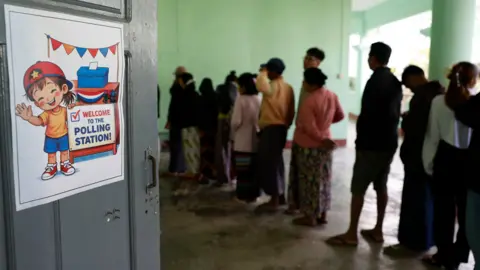
At least 170 people were killed in military air strikes during Myanmar's weeks' long election period, the United Nations has said. Credible sources counted the civilian deaths, the UN rights office stated, along with 408 military aerial attacks from December 2025 to late last week, coinciding with the final round of voting. The election itself has been widely denounced as a sham by various countries and human rights groups. The Union and Solidarity Party (USDP), backed by Myanmar's military, claimed an overwhelming victory, as reported by state media—an outcome that was anticipated given the tightly-controlled electoral process.
Voting was not feasible in many regions of the country, engulfed in a civil war initiated by a military coup in 2021 that ousted the democratically elected leader, Aung San Suu Kyi, who remains imprisoned. The National League for Democracy, which previously secured landslide victories, was barred from contesting the vote. Many analysts believe the military junta will leverage the election results to sustain its power through proxy political entities.
UN rights chief Volker Turk criticized the election as being orchestrated by the military, pointing out that many opposition candidates and ethnic groups were intentionally excluded from participating. Concurrently, violence and strife persist throughout significant portions of the country. James Rodehaver, head of the UN Human Rights team focusing on Myanmar, noted that the findings on civilian casualties from military strikes reflected incidents from campaign commencement in December to the final voting day in late January. These figures might be underestimated due to restricted communication and individuals' fear to provide information under the current regime.
Voting was not feasible in many regions of the country, engulfed in a civil war initiated by a military coup in 2021 that ousted the democratically elected leader, Aung San Suu Kyi, who remains imprisoned. The National League for Democracy, which previously secured landslide victories, was barred from contesting the vote. Many analysts believe the military junta will leverage the election results to sustain its power through proxy political entities.
UN rights chief Volker Turk criticized the election as being orchestrated by the military, pointing out that many opposition candidates and ethnic groups were intentionally excluded from participating. Concurrently, violence and strife persist throughout significant portions of the country. James Rodehaver, head of the UN Human Rights team focusing on Myanmar, noted that the findings on civilian casualties from military strikes reflected incidents from campaign commencement in December to the final voting day in late January. These figures might be underestimated due to restricted communication and individuals' fear to provide information under the current regime.