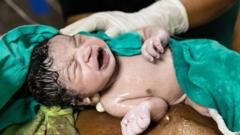
India has officially surpassed China to become the world’s most populous nation, boasting a staggering population of approximately 1.45 billion people. This demographic shift has sparked a renewed conversation around fertility rates and population growth, especially from leaders in southern states like Andhra Pradesh and Tamil Nadu, who are calling for an increase in the number of children born.
In Andhra Pradesh, the government is considering incentives to encourage families to have more children, reflecting concerns over low fertility rates and a burgeoning ageing population. The state has also recently abolished its "two-child policy" for local elections, paving the way for potentially similar actions by neighboring Telangana. Tamil Nadu is echoing these sentiments, driven by fears of losing political representation in a slowing population landscape.
India's fertility rate has dropped significantly over the decades, from 5.7 births per woman in 1950 to a current average of two. Alarmingly, 17 out of 29 Indian states have seen their fertility rates dip below the replacement level of two births per woman—a crucial threshold for maintaining population stability. The five southern states have already achieved fertility rates lower than 1.6, comparable to several European nations.
These states express anxiety about how population redistribution could affect political dynamics and resource allocation once electoral seats are redrawn in 2026. Despite past successes in population control, their effective strategies may lead to diminished political voice in a changing federal landscape. The potential for northern states like Uttar Pradesh and Bihar to gain additional parliamentary seats complicates this issue, with concerns growing about fiscal implications.
As demographics evolve, experts warn about a rapidly ageing population. While demographic trends in developed nations like France and Sweden evolved over a century, India faces a swift transition; predictions suggest India could double its elderly population at a daunting rate of 28 years. This rapid ageing rates raise questions about the nation’s capacity to care for an increasingly elderly demographic, especially as many elderly Indians belong to the poorest wealth quintile.
In response to declining birth rates, the chief of the nationalist Rashtriya Swayamsevak Sangh, a key ideological supporter of Prime Minister Narendra Modi's BJP, has called for families to consider having at least three children to secure India's future. Although there are concerns about low fertility, experts caution that overstating the crisis may not be warranted.
Countries grappling with declining birth rates, such as South Korea and Greece, have declared their situations as national emergencies, with urgency in addressing resultant socio-economic challenges. Indian states like Tamil Nadu are similarly at a crossroads as they face a declining workforce with vital questions about who will fill job roles.
Moving forward, demographers suggest that India should focus on extending retirement ages and enhancing living standards for older citizens. With a potential "silver dividend" up for grabs, efforts must target economic growth by making the most of the upcoming working-age demographic. There's a clear window of opportunity until 2047 for India to harness its demographic dividend and rejuvenate its economy.