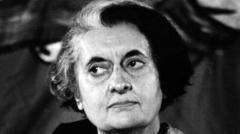
The forgotten story of India's brush with presidential rule dates back to the mid-1970s when Prime Minister Indira Gandhi imposed the Emergency, leading to the suspension of civil liberties and the incarceration of political adversaries. This period saw a push by Gandhi's inner circle to reshape the political landscape from a parliamentary democracy to a centralized state governed by a presidential model, as elucidated in historian Srinath Raghavan's latest book, "Indira Gandhi and the Years That Transformed India."
Raghavan reveals that influential bureaucrats and party loyalists rallied for an empowered presidency that would bypass the judiciary and reduce parliamentary relevance. Their vision drew inspiration from Charles de Gaulle's France, suggesting that a strong presidency could facilitate decisive action unencumbered by parliamentary constraints. The movement towards this model was ignited by a letter from BK Nehru, a close aide to Gandhi, who characterized the Emergency as a crucial opportunity for restructuring governance.
Nehru argued that India needed a directly elected president not beholden to the parliament, one capable of making tough decisions for the national interest. Despite his ambitious proposal, which included stripping down fundamental rights and overhauling constitutional checks, Gandhi remained cautious and maintained a balance between exploring these ideas and reassuring the public about the preservation of democracy.
While some Congress leaders supported the shift, Gandhi ultimately decided against fully adopting the presidential system. The uncertain ideas culminated in the Forty-second Amendment of 1976, which expanded parliamentary power and curtailed judicial review, setting a precedent for a more authoritarian governance model. This amendment also enabled direct federal rule and made it arduous for the judiciary to intervene in electoral matters.
However, following Gandhi's electoral defeat in 1977, the new Janata Party sought to reverse the authoritarian changes made during the Emergency, moving to restore democratic norms. Despite returning to power in 1980, Gandhi again pondered the allure of the presidency but chose to appoint a loyal ally instead. The aspiration for a presidential system lingered, but debates around it faded following Gandhi's assassination in 1984, leaving India as a parliamentary democracy.
Raghavan posits that while Gandhi's regime was characterized by efforts to strengthen her political grip, the ultimate decision against reshaping the governance structure stemmed from both tactical considerations and a lack of national support for drastic changes. The period of the Emergency stands as a critical moment in understanding India's political evolution and the enduring complexities of its democratic framework.
Raghavan reveals that influential bureaucrats and party loyalists rallied for an empowered presidency that would bypass the judiciary and reduce parliamentary relevance. Their vision drew inspiration from Charles de Gaulle's France, suggesting that a strong presidency could facilitate decisive action unencumbered by parliamentary constraints. The movement towards this model was ignited by a letter from BK Nehru, a close aide to Gandhi, who characterized the Emergency as a crucial opportunity for restructuring governance.
Nehru argued that India needed a directly elected president not beholden to the parliament, one capable of making tough decisions for the national interest. Despite his ambitious proposal, which included stripping down fundamental rights and overhauling constitutional checks, Gandhi remained cautious and maintained a balance between exploring these ideas and reassuring the public about the preservation of democracy.
While some Congress leaders supported the shift, Gandhi ultimately decided against fully adopting the presidential system. The uncertain ideas culminated in the Forty-second Amendment of 1976, which expanded parliamentary power and curtailed judicial review, setting a precedent for a more authoritarian governance model. This amendment also enabled direct federal rule and made it arduous for the judiciary to intervene in electoral matters.
However, following Gandhi's electoral defeat in 1977, the new Janata Party sought to reverse the authoritarian changes made during the Emergency, moving to restore democratic norms. Despite returning to power in 1980, Gandhi again pondered the allure of the presidency but chose to appoint a loyal ally instead. The aspiration for a presidential system lingered, but debates around it faded following Gandhi's assassination in 1984, leaving India as a parliamentary democracy.
Raghavan posits that while Gandhi's regime was characterized by efforts to strengthen her political grip, the ultimate decision against reshaping the governance structure stemmed from both tactical considerations and a lack of national support for drastic changes. The period of the Emergency stands as a critical moment in understanding India's political evolution and the enduring complexities of its democratic framework.