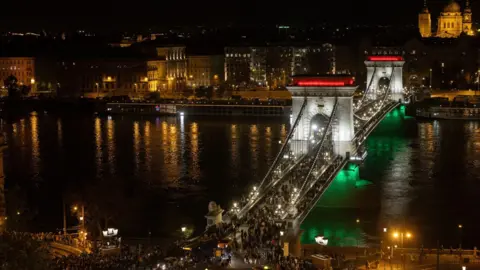
Budapest's iconic Chain Bridge links both sides of the city - beautiful Buda with vibrant Pest - across the river Danube. At night, the lights that illuminate the bridge shimmer like mini moons in the waters below.
Normally, it's a favourite spot for tourist selfies - but not this Sunday.
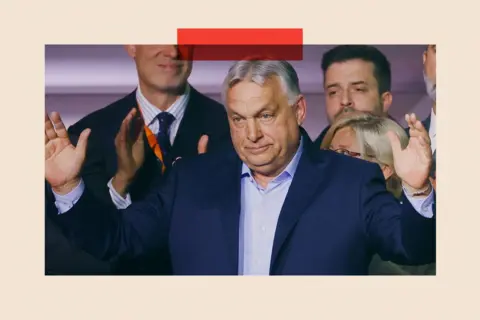
Following a historic election result that unceremoniously booted Prime Minister Viktor Orbán out after 16 years in government, the bridge was lit up in green, white and red - the colours of the Hungarian flag.
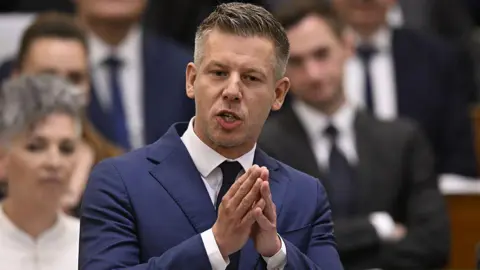
Supporters of the triumphant Péter Magyar and his Tisza party said they felt they were getting their country back. A sense Magyar reflected back to them in his victory speech.
We did it, he said. We brought down the Orbán regime - together we liberated Hungary. We took back our homeland! Thank you! Thank you all!
There was a definite sense here that history was being made. Voter turnout was record-breaking. Despite Orbán's iron grip on state media, the changes he introduced to the electoral system to favour his party and the huge influence his friends and family members have in positions of power in the illiberal democracy he said he turned Hungary into, the Fidesz leader was totally trounced at the polls.
I watched crowds of first-time voters dancing through Budapest's backstreets, drunk with a heady mix of hope and incredulity in the early hours of Monday morning.
As Zofia spoke, her group of friends were loudly chanting Russians Go home!
It's an ironic full circle for Orbán. He became famous in 1989 in then-communist Hungary, calling on Russians to go home in a passionate speech he gave in the dying days of the Soviet Union. It's a phrase that first ricocheted through Budapest during Hungary's ill-fated anti-communist uprising of 1956.
Orbán's ousting is a significant blow for Putin, who benefitted from having an ally inside the EU. Orbán delayed sanction packages after Russia's full-scale invasion of Ukraine and has been blocking a huge EU loan to Kyiv it says it needs to survive.
But Russia's loss is Ukraine's gain. President Volodymyr Zelensky was quick to congratulate Magyar on Sunday night, writing on X that he looked forward to constructive work together.
Few European leaders will shed a tear at Orbán's departure. In Brussels, he was nicknamed the Obstructor but more broadly he was viewed as the faultline in a European united front when it came to threats from Moscow, Beijing and, more recently, the US too.
On Sunday night, UK Prime Minister Sir Keir Starmer described this as an historic moment for European democracy. The European Commission President Ursula von der Leyen said Hungary had chosen Europe.
For now, most Hungarians say their priorities are domestic: improving their country's sagging economy and public services, lowering inflation and the cost of living. There's a lot to do.
Grinning with happiness late on Sunday, surrounded by jubilant supporters, Magyar told the crowds: Tonight we celebrate. Tomorrow, we get to work!