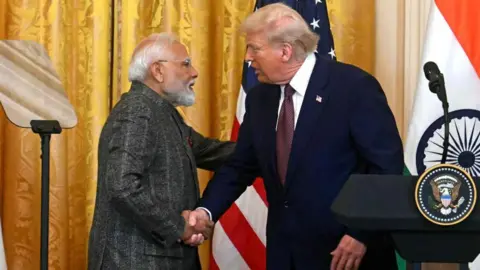
High above the vast assembly of Hindu pilgrims at the Maha Kumbh Mela in Prayagraj, India, Prime Minister Narendra Modi's image adorns numerous billboards, alongside his ally, Uttar Pradesh Chief Minister Yogi Adityanath, showcasing the event's political significance. The Kumbh Mela, heralded as the world's largest gathering of humanity, boasts an influx of devotees who believe immersing themselves in the sacred confluence of the Ganges and Yamuna rivers will absolve them of sins.
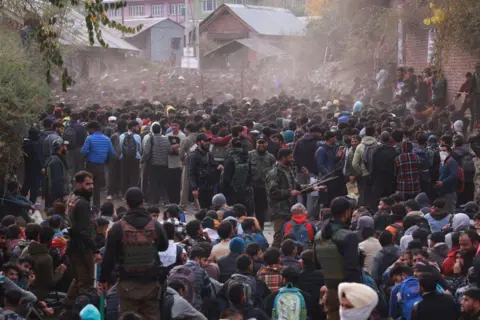
However, this year's festival turned tragic as a stampede resulted in at least 30 fatalities and 90 injuries, prompting scrutiny over event safety. Despite the gravity of the situation, Adityanath's delayed acknowledgment of the crisis has raised concerns regarding transparency and governance.
The vibrant scene at the Kumbh Mela includes an eclectic mix of participants: ascetics, tourists, and vendors who contribute to the festival's dynamic atmosphere. This annual event is as much a spiritual pilgrimage as it is a logistical marvel, boasting a temporary city equipped with essential amenities.
Yet, amidst the spiritual fervor, political undertones remain palpable, with Modi and Adityanath leveraging the gathering to showcase India's progress on both domestic and international stages. The juxtaposition of profound devotion and high-stakes politics makes the Maha Kumbh a complex phenomenon, offering a microcosm of contemporary India's societal landscape.
In the wake of the tragedy, there are urgent calls for accountability and improved safety measures, as the nation grapples with the intersection of faith, politics, and the imperative of protecting its citizens during one of the largest religious congregations in human history.
However, this year's festival turned tragic as a stampede resulted in at least 30 fatalities and 90 injuries, prompting scrutiny over event safety. Despite the gravity of the situation, Adityanath's delayed acknowledgment of the crisis has raised concerns regarding transparency and governance.
The vibrant scene at the Kumbh Mela includes an eclectic mix of participants: ascetics, tourists, and vendors who contribute to the festival's dynamic atmosphere. This annual event is as much a spiritual pilgrimage as it is a logistical marvel, boasting a temporary city equipped with essential amenities.
Yet, amidst the spiritual fervor, political undertones remain palpable, with Modi and Adityanath leveraging the gathering to showcase India's progress on both domestic and international stages. The juxtaposition of profound devotion and high-stakes politics makes the Maha Kumbh a complex phenomenon, offering a microcosm of contemporary India's societal landscape.
In the wake of the tragedy, there are urgent calls for accountability and improved safety measures, as the nation grapples with the intersection of faith, politics, and the imperative of protecting its citizens during one of the largest religious congregations in human history.