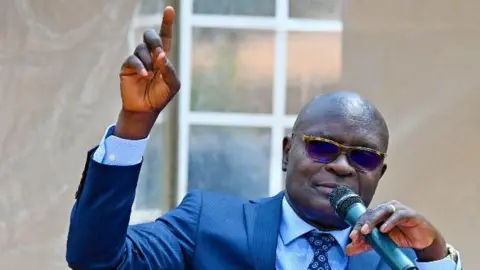
Simon Byabakama, the head of Uganda's electoral body, disclosed that he has received threats warning him against declaring certain presidential candidates the victors of Thursday's election. Speaking at the Electoral Commission headquarters in Kampala, Byabakama stated that he would not be intimidated by such threats from senior state officials, whom he refrained from naming.
This declaration stems from a widely circulated video where a presidential assistant claimed that the electoral commission would not declare opposition candidate Robert Kyagulanyi, known as Bobi Wine, winner, even if he were to secure a majority of votes. Some people say if you don't declare so-and-so as president, you will see. I tell them that I am not in the business of donating votes, Byabakama asserted.
President Yoweri Museveni, who has held power for nearly four decades, is running for a seventh term against Bobi Wine, a pop star turned politician. The race also includes six other candidates, with approximately 21.6 million registered voters.
Byabakama asserted that Uganda's legal framework, not individual threats, would determine the outcome of the election, noting, The law says that the candidate who receives more than 50% plus one of the total valid votes cast is the president of Uganda. It is the voters who determine how many votes a candidate gets. What the voters have said is what I will declare to the nation. He intends to announce the election results within 48 hours after polls close.
Despite a heavy military presence during the campaign period and widespread reports of opposition activities being disrupted, Byabakama remained firm, stating that security forces are deployed to ensure peace and should not intimidate voters. He acknowledged concerns regarding polling stations located within military premises and promised to investigate these reports.
The authorities cut internet access nationwide just days before the election under the guise of combating misinformation, which has further increased fears of repression leading up to the polls. Nevertheless, Byabakama maintained that only the will of the voters and the current laws would guide the election process.