In brief
Venezuela has vocally criticized the United States for its seizure of oil tankers, describing the actions as 'worse than piracy' and part of a larger pattern of 'extortion' against the country. This has sparked international backlash and calls for the U.S. to cease its actions in the region. US officials maintain their stance against Venezuelan leadership and emphasize their commitment to combat narcotics trafficking.
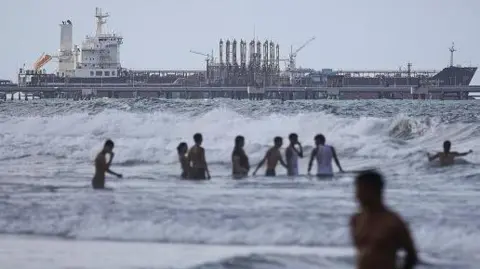
Venezuela has accused the United States of the 'greatest extortion' during an emergency session of the UN Security Council held in New York. The Venezuelan ambassador to the UN described Washington's seizure of two Venezuelan oil tankers as 'worse than piracy.' The session was convened following the U.S. confiscation of these vessels which occurred off the Venezuelan coast earlier this month, with reports now indicating that the U.S. is also targeting a third tanker. President Trump previously labeled Venezuela's leader, Nicolas Maduro, as a drug cartel operator, asserting that criminal gangs have operated unchecked for too long. In an aggressive move, Trump ordered a naval blockade on all sanctioned oil tankers entering and leaving Venezuela on December 16, claiming the U.S. would retain or sell the oil seized, in addition to the vessels themselves. The U.S. has been bolstering its military presence in the Caribbean with a deployment of 15,000 troops and various naval assets, aiming to disrupt the trafficking of drugs like fentanyl and cocaine into the U.S. More than 20 boats linked to Venezuelan drug smuggling have reportedly been targeted, resulting in significant casualties. Some analysts warn that these actions could potentially infringe upon international law. Samuel Moncada, the Venezuelan envoy to the UN, condemned this behavior as 'pillaging' and an example of the U.S.'s disregard for international law, asserting the rights of Venezuela over its oil resources. He questioned the U.S. stance, stating, 'What does that have to do with drugs?' In a rebuttal, U.S. Ambassador to the UN Michael Waltz reiterated that the U.S. does not recognize Maduro as Venezuela's legitimate leader, arguing that Maduro's access to revenue from oil sales supports his corrupt regime and narco-terrorist activities. Meanwhile, nations such as Russia and China have denounced U.S. actions as aggressive and illegal, with warnings that they may set a precedent for future interventions in Latin America. Amidst escalating tensions, Maduro asserted his administration's approval from the Security Council throughout this crisis.