In brief
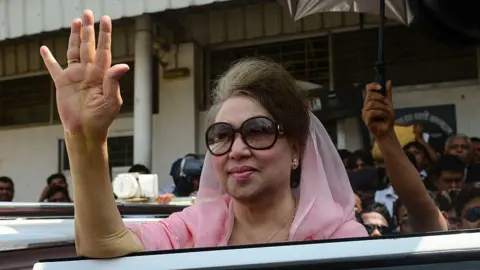
Khaleda Zia, renowned as Bangladesh's first female prime minister and a key political figure, has died at the age of 80. Her passing marks the end of a significant chapter in Bangladeshi politics, characterized by her enduring rivalry with Sheikh Hasina and her contributions to the country's democratic movements.
Khaleda Zia, Bangladesh's first female prime minister and an arch-rival of ousted leader Sheikh Hasina, has died from a prolonged illness at the age of 80. Zia intended to run for parliament in February, coinciding with the country’s elections after a revolution that ousted Hasina in late 2024. Thrust into politics following the assassination of her husband, President Ziaur Rahman, she made history as the nation's first female PM in 1991.Despite enduring a tumultuous political career that included periods of imprisonment and house arrest, Zia solidified her status as a formidable leader. She was acquitted of corruption charges and allowed to travel for treatment only after losing to Hasina.Her condition had deteriorated markedly in recent weeks, with physicians declaring her extremely critical. Upon her death, crowds gathered outside the Evercare Hospital in Dhaka, reflecting the public’s sentiments around her legacy.Zia's political journey was characterized by a fierce rivalry with Hasina, defined by political machinations and personal enmity. Known for her uncompromising leadership, she gained recognition for advocating women’s education and social reforms.Zia's legacy has left a profound impact on Bangladesh's political landscape, with many seeing her as a symbol of resistance against perceived autocracy. Following her death, condolences poured in from political leaders, including India’s Prime Minister Narendra Modi and Pakistan’s Prime Minister Shehbaz Sharif, recognizing her contributions to Bangladesh and its political movements.With Zia's passing, the future of the Bangladesh Nationalist Party (BNP) now rests on the shoulders of her son, Tarique Rahman, poised to take on a leadership role as the party aims for a revival in the upcoming elections.