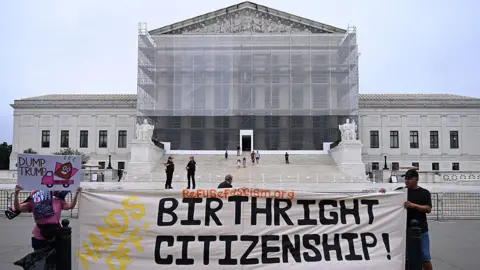
The US Supreme Court has agreed to hear a case on whether some children born in the US have a constitutional right to citizenship.
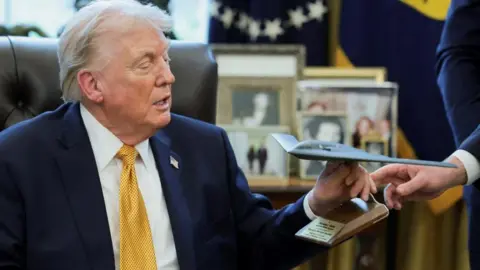
On his first day in office, former President Donald Trump signed an executive order to end birthright citizenship for those born to parents who are in the country illegally, but this move was blocked by multiple lower courts.
No date has been set yet for the Supreme Court arguments, and a ruling is months away.
Whatever the court decides could have major implications for Trump's immigration crackdown and for what it means to be an American citizen.
For nearly 160 years, the 14th Amendment of the US Constitution has established the principle that anyone born in the country is a US citizen, with exceptions for children born to diplomats and foreign military forces.
The amendment states: All persons born or naturalized in the United States, and subject to the jurisdiction thereof, are citizens of the United States. Trump's executive order seeks to deny citizenship to the children of people who are either in the US illegally or are in the country on temporary visas. It aligns with the administration's broader effort to reform the nation's immigration system.
Cecilia Wang, national legal director of the American Civil Liberties Union, which is representing the plaintiffs in the case, stated that no president can change the 14th Amendment's promise of citizenship. For over 150 years, it has been the law and our national tradition that everyone born on U.S. soil is a citizen from birth, she emphasized.
The US is among about 30 countries that grant automatic citizenship to anyone born within their borders. Following legal challenges to Trump's executive order, several federal court judges ruled that it violated the Constitution, leading to appeals which ultimately reached the Supreme Court.
US Solicitor General D John Sauer has argued that the amendment was designed to confer citizenship on newly freed slaves and explicitly does not apply to the children of temporary visitors or unauthorized immigrants. As this case heads to the Supreme Court, it could redefine fundamental aspects of citizenship in the US, with significant implications for millions.