In brief
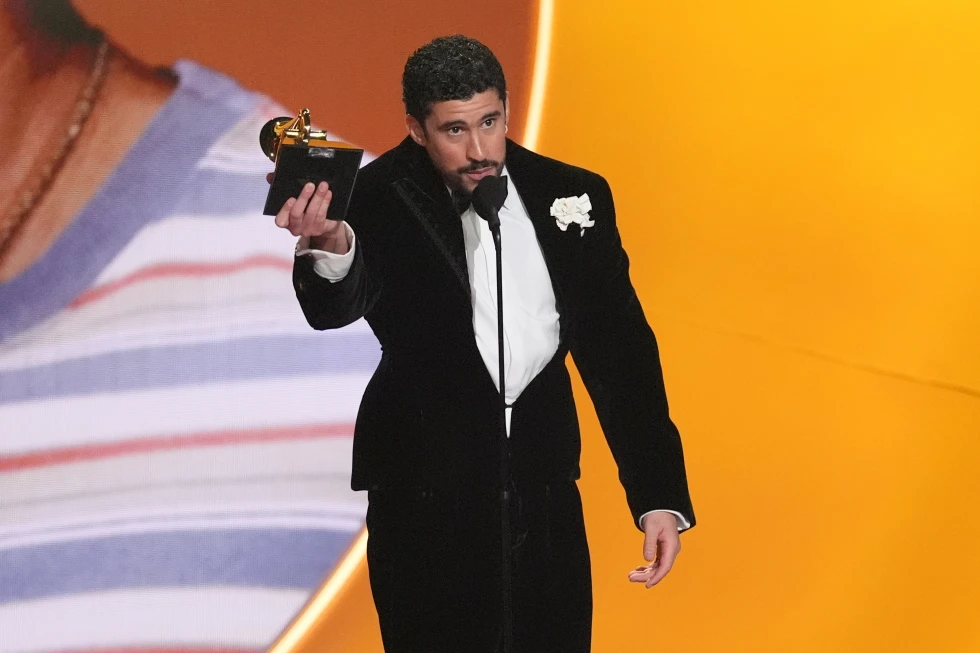
The 2026 Grammy Awards featured Bad Bunny's historic win for Album of the Year with 'Debí Tirar Más Fotos,' amid robust anti-ICE sentiments from various artists. The event highlighted the evolving diversity within the Grammy nominations as the Recording Academy has made efforts to embrace broader representation. Celebrity acceptance speeches criticized immigration enforcement, emphasizing solidarity with immigrant communities, while Bad Bunny's victory represents significant recognition for Latin music in mainstream culture.
LOS ANGELES (AP) — The record that won album of the year at the 2026 Grammy Awards Sunday night — Bad Bunny’s “Debí Tirar Más Fotos” — is the one many industry experts labeled the most deserving, and therefore an unlikely candidate for victory.
In the same breath, the Grammys — not a place historically known for fervent political messaging — was filled with celebrities taking anti-Immigration and Customs Enforcement stances. Of the nine televised awards handed out to seven different artists, nearly half addressed immigration in their acceptance speeches.
An evolving Grammy Awards
The Grammy Awards have long been criticized over a lack of diversity, with a history of artists of color, women, rap, Latino and R&B musicians being snubbed for top prizes. In the past few years, however, that reputation has started to become challenged as the Recording Academy worked to add thousands of new voters across a variance of backgrounds. The results are notable: 3,800 new Recording Academy members were added in 2025. Half — 50% — are 39 and under, 58% are people of color, and 35% identify as women.
The 2025 Grammy ceremony seemed to reflect these changing dynamics as well, as Beyoncé and Kendrick Lamar won major categories. And in 2026, that trend appears to have continued.
Bad Bunny’s victory lap
Bad Bunny is one of only a few Latino album of the year winners, a short list that includes Santana in 2000 for “Supernatural” and Stan Getz and João Gilberto’s “Getz/Gilberto” in 1965.
“There’s so much amazing Latin music that has been overlooked and that’s part of what is so beautiful about this moment,” says Vanessa Díaz, co-author of “P FKN R: How Bad Bunny Became the Global Voice of Puerto Rican Resistance.” “And that’s why it feels like a win.”
By a number of metrics, 'Debí Tirar Más Fotos' was 2025’s most-streamed release, globally. But it is not only a commercial success story, it is an artistic one.
The album is a love letter to Puerto Rico that marries folkloric tradition in local Borinquen genres like bomba, plena, salsa and música jíbara with contemporary, internationally recognized styles like reggaeton, trap and electronic pop. That combination of new and old is something the Recording Academy has historically celebrated — looking at you, Bruno Mars’ retro hooks — but to be recognized for an all-Spanish language release is uncharted territory.
The album is also political, but its messages are not exclusive to Puerto Rican or even Latino identity. “The lyrics on this album align with global struggles,” says Albert Laguna, associate professor of ethnicity, race and migration at Yale.
In the case of Bad Bunny, the Recording Academy is meeting the pop culture zeitgeist where it is at, celebrating an artist at the peak of their popularity: Next week Bad Bunny will perform at the Super Bowl halftime show, an event that is gearing up to be a landmark moment for Latino culture.
Anti-ICE sentiment on stage
Anti-ICE sentiment permeated all corners of Sunday’s Grammys as immigration enforcement surges in the United States. During the CBS broadcast, Bad Bunny, Billie Eilish, and first-time Grammy winner Olivia Dean used their time on screen to send a message. “No one is illegal on stolen land,” said Eilish. “(Expletive) ICE.”
Backstage, SZA similarly cursed ICE and stressed the importance of being able “to disseminate mutual aid.” Gloria Estefan said backstage after winning an award, “I don’t recognize my country in this moment right now.”
A historical precedent
Bad Bunny’s use of “savage” in his speech has historic precedent: Spain ceded Puerto Rico to the United States after the Spanish-American War in 1898, and political cartoons of the time frequently depicted Puerto Ricans as racially inferior. “Our communities are being targeted. These winds right now that feel celebratory of the Spanish language, which is being literally criminalized — these winds, right now, for a community that is being targeted on such a deep level — it is a little bit of light,” Díaz comments. “It is a little of faith that we can still carve out our place here.”