A federal judge on Saturday denied a state government request to block the Trump administration's deployment of thousands of federal immigration agents in Minneapolis, Minnesota.
In a ruling, District Court Judge Katherine Menendez stated that the immigration enforcement operation has had, and will likely continue to have, profound and even heartbreaking, consequences on the State of Minnesota. However, she added that state officials had not proven that the surge of U.S. Immigration and Customs Enforcement (ICE) agents in Minneapolis was unlawful.
The ruling comes as thousands nationwide have taken to the streets to protest the fatal shootings of two U.S. citizens by federal agents. Demonstrators gathered in Minneapolis and in cities across the U.S., including New York, Los Angeles, and Washington, in response to the deaths of Renee Good and Alex Pretti, leading to widespread public outcry and criticism from lawmakers across party lines.
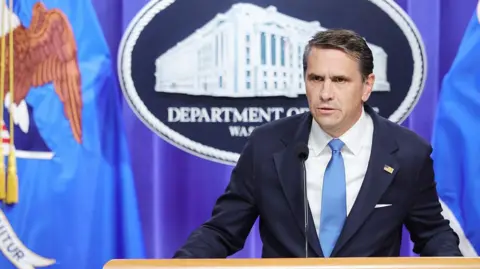
Earlier this week, the U.S. Justice Department launched a civil rights investigation into Pretti's death, the second shooting of a Minneapolis resident by federal immigration officials.
In her decision, Judge Menendez noted evidence of racial profiling and excessive force by ICE and Customs and Border Protection (CBP) agents but found that state officials have provided no metric by which to determine when lawful law enforcement becomes unlawful commandeering.
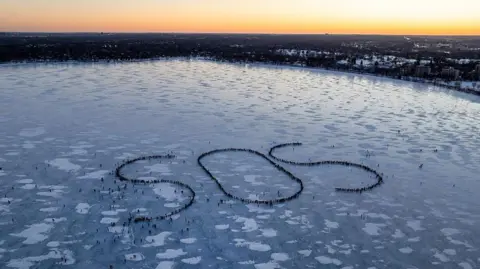
Organizers of the nationwide protests urged Americans to participate in a National Shutdown on January 30, advocating for no work, no school, and no shopping to send a message against funding ICE operations. Demonstrators even formed the letters SOS on a frozen lake in Minneapolis to signify distress regarding the ongoing situation.
Trump administration officials, including border tsar Tom Homan, have asserted their commitment to maintain safety and security through the deployment of 3,000 federal agents, claiming they are focused on apprehending the worst of the worst criminal illegal aliens.
Critics, however, argue that law-abiding migrants and U.S. citizens are being swept up in the enforcement campaign, leading to growing tensions in the region. It is clear that the situation remains volatile as public protests continue to intensify against the backdrop of this contentious federal enforcement initiative.