Taiwan has insisted it is a sovereign, independent nation following comments from U.S. President Donald Trump, who cautioned against formally declaring independence from China. Trump's remarks followed a two-day summit in Beijing, where he stated he had made no commitments regarding the self-governing island, which China claims as part of its territory and has not ruled out taking by force.
After talks with Chinese President Xi Jinping, Trump indicated that he was deliberating on an $11 billion arms package for Taiwan, while acknowledging the difficulty in balancing U.S. obligations to defend Taiwan amid the complex diplomatic relationship with China.
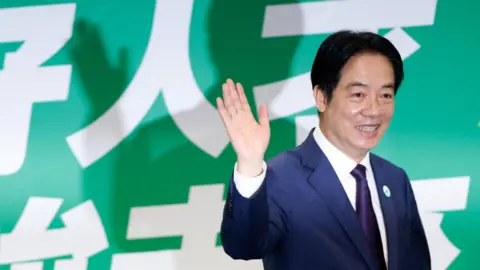
President Lai Ching-te reassured that Taiwan does not need to declare formal independence since it identifies itself as a sovereign nation already. Lai's spokesperson emphasized that it is 'self-evident' Taiwan is an independent democratic country, yet reiterated that Taiwan is committed to maintaining the existing status quo, avoiding any shifting towards independence or unification with China.
Public sentiment in Taiwan largely leans towards defining themselves as a distinct nation but with a preference to retain peace and the current relationship with China rather than pursue formal independence. U.S. policy traditionally supports Taiwan's right to self-defense while discouraging any moves towards independence, which complicates Washington's diplomatic ties with Beijing.
This geopolitical tug-of-war continues as tensions in the region escalate, with China conducting military drills around Taiwan and expressing discontent over the Taiwanese government's stance under President Lai, characterized by Beijing as a 'troublemaker.'
After talks with Chinese President Xi Jinping, Trump indicated that he was deliberating on an $11 billion arms package for Taiwan, while acknowledging the difficulty in balancing U.S. obligations to defend Taiwan amid the complex diplomatic relationship with China.
President Lai Ching-te reassured that Taiwan does not need to declare formal independence since it identifies itself as a sovereign nation already. Lai's spokesperson emphasized that it is 'self-evident' Taiwan is an independent democratic country, yet reiterated that Taiwan is committed to maintaining the existing status quo, avoiding any shifting towards independence or unification with China.
Public sentiment in Taiwan largely leans towards defining themselves as a distinct nation but with a preference to retain peace and the current relationship with China rather than pursue formal independence. U.S. policy traditionally supports Taiwan's right to self-defense while discouraging any moves towards independence, which complicates Washington's diplomatic ties with Beijing.
This geopolitical tug-of-war continues as tensions in the region escalate, with China conducting military drills around Taiwan and expressing discontent over the Taiwanese government's stance under President Lai, characterized by Beijing as a 'troublemaker.'