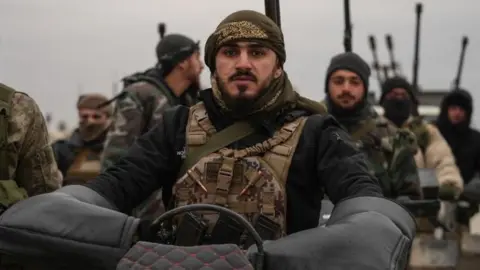
In the complex mosaic of the new Syria, the old battle against the group calling itself Islamic State (IS) continues in the Kurdish-controlled north-east. It's a conflict that has slipped from the headlines - with bigger wars elsewhere.
Kurdish counter-terrorism officials have reported that IS cells in Syria are regrouping and increasing their attacks. Recent data indicates that the militant group has seen a ten-fold increase in operations.
Behind bars, the largest jail for IS suspects is al-Sina in Al Hasakah, holding around 8,000 detainees from various countries. Conditions within these prisons are severe, with no amenities or contact to the outside world. Yet, prison commanders warn that IS is still operating internally, with key leaders maintaining control and spreading their ideology.
Hamza Parvez, a Londoner who became involved with IS at 21, expresses his wish to return to the UK, stating, We did come. We did join the Islamic State. It's not something that we can hide. Many fighters, like Parvez, find themselves in dire conditions, battling tuberculosis and questioning their past actions.
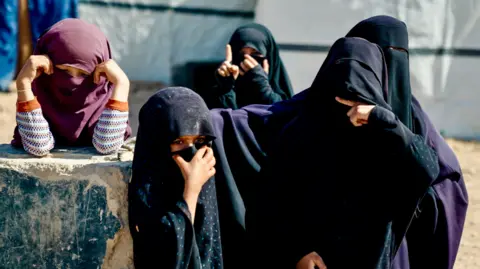
Families of IS members are also caught in crises. Many are detained in sprawling camps likened to open-air prisons, subject to harsh conditions and rampant disease. One woman, Mehak Aslam, recounts the loss of her daughter in a war zone while living under IS's shadow. Her family, including her four children, is now caught in a grim existence in these camps.
As Kurdish forces patrol the camps, they express concern that a new generation being raised there may cling to IS ideology, posing a potential threat to regional stability. They are the seeds for a new version of IS, laments Hekmiya Ibrahim, a camp manager.
This resurgence poses a challenge for international allies, particularly given the lack of pathways for repatriating foreign nationals and their families. Without intervention, the reality in these camps could feed further extremism in the future.